






Now Reading: Don-Turned-Politician Shot Dead in Rival Attack: Bihar’s Power Struggle Turns Bloody Again
-
01
Don-Turned-Politician Shot Dead in Rival Attack: Bihar’s Power Struggle Turns Bloody Again
Don-Turned-Politician Shot Dead in Rival Attack: Bihar’s Power Struggle Turns Bloody Again
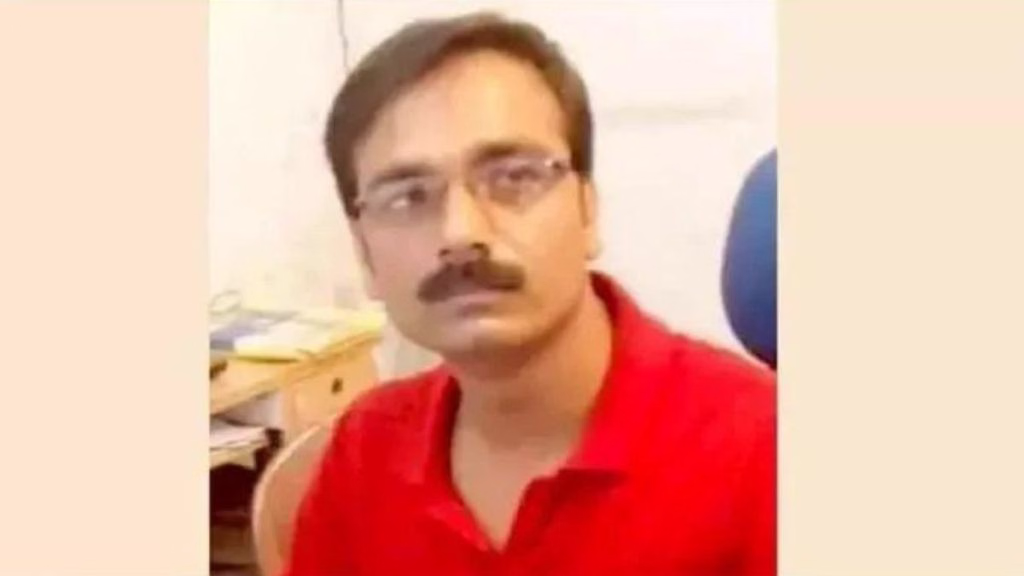
A former gangster who later entered politics was shot dead in Bihar, allegedly by men linked to another well-known strongman. The killing has reignited debate over the deep-rooted nexus between crime and politics in the state, where many local leaders continue to wield influence through muscle power and money.
The killing and what led to it
According to initial police reports, the don-turned-politician was attacked while traveling with his aides. Armed men ambushed the vehicle and opened fire, leaving him dead on the spot. Investigators believe the assailants were associated with another local strongman, with whom the deceased had a long-standing rivalry over political control and territory.
A reminder of Bihar’s criminal politics
The incident highlights a grim reality that Bihar has struggled to shake off for decades—criminals entering mainstream politics and using it as a shield for their networks. Many such figures, often referred to as “bahubalis,” hold considerable sway in their regions, influencing elections, contracts, and local governance through intimidation and loyalty.
Police and political reactions
Police have formed special teams to track down the attackers and have already detained a few suspects for questioning. Senior officers described the killing as a fallout of “personal enmity turned political.” Meanwhile, opposition parties have accused the state government of failing to control law and order, claiming that such incidents expose the continuing dominance of muscle power in politics.
Local response and public concern
Residents in the area say that violence between rival political groups is nothing new. Many expressed fear that the killing could trigger retaliatory attacks, especially with elections approaching. Some locals also pointed out that despite repeated crackdowns, many former gangsters continue to contest elections openly, sometimes even winning with large margins.
The bigger picture
The murder reflects a broader pattern in Indian politics, where the line between crime and governance often blurs. In states like Bihar and Uttar Pradesh, the presence of candidates with criminal backgrounds remains high, raising questions about voter choices and the effectiveness of political reforms aimed at cleansing the system.
Conclusion:
The killing of the don-turned-politician is more than just another crime story—it’s a reminder of how deep the roots of muscle power run in Bihar’s political culture. Unless strong accountability measures and voter awareness campaigns gain traction, such violent rivalries will continue to shadow the state’s democratic process.