







Now Reading: When “LOUVRE” Was the Password: A Wake-Up Call for Digital Security
-
01
When “LOUVRE” Was the Password: A Wake-Up Call for Digital Security
When “LOUVRE” Was the Password: A Wake-Up Call for Digital Security
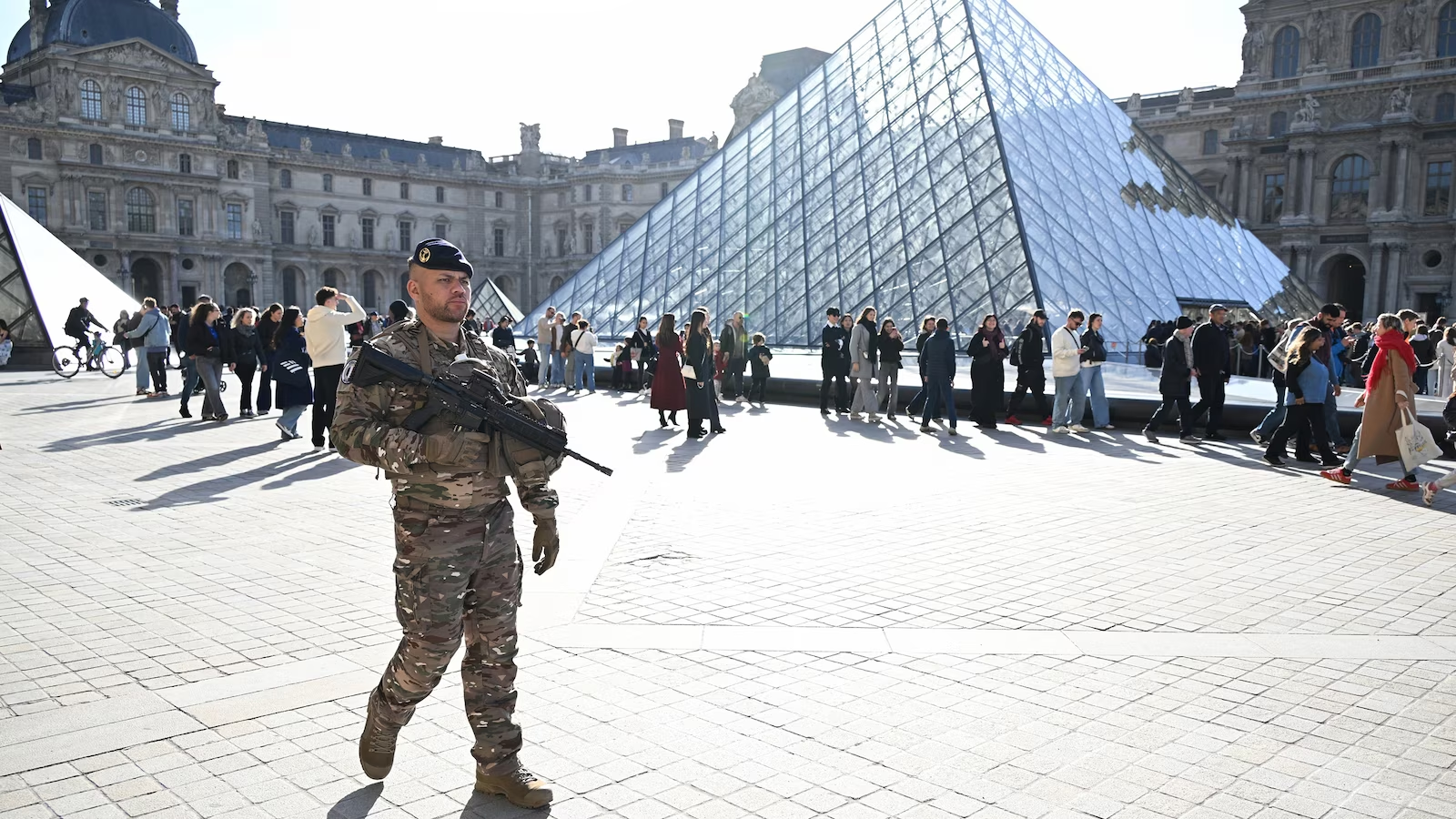
A recent investigation into the high-profile heist at Louvre Museum in Paris revealed a startling detail: one of its core video-surveillance systems was protected by the password “LOUVRE”. The revelation has sparked widespread amusement and serious concern—not just in museum circles abroad but for institutions and users in India’s smaller cities too.
How did it happen?
The security audit uncovered that the museum’s surveillance server could be accessed using the same simple name as the institution itself. For an institution housing priceless artworks and welcoming thousands of visitors daily, such a password raises questions about basic cyber hygiene. The heist, in which valuable jewels were stolen in broad daylight, appears to have been enabled—at least in part—by this digital vulnerability.
Why this matters everywhere
In Tier 2 cities and smaller towns across India, many organisations—from educational institutions to local archives and civic offices—are ramping up digital systems for records, surveillance and access control. Yet the same weak link observed in this case—a simple, guessable password—often persists. The Louvre case underscores that the size or prestige of an institution doesn’t protect it from basic cybersecurity oversights. Every database, every access point is at risk.
Lessons for Indian users and organisations
The first lesson is to treat password security as non-negotiable. Using the organisation’s name, or any easily linked word, is risky at best. Stronger passwords, regular audits, and multi-factor authentication are basic steps that even small offices in Nagpur, Indore or Guwahati can adopt. Secondly, periodic review of legacy systems matters: the Louvre’s audit found decades-old software still in use alongside weak credentials. In many Indian settings, legacy tools remain unpatched, making them vulnerable.
Broader implications for trust and governance
When a globally renowned institution falls short on digital protection, public trust takes a hit. In India’s context, where digital governance is being promoted heavily—be it through smart cities, Aadhar-linked systems or citizen service portals—the message is clear: secure implementation matters as much as access. For voters, taxpayers and everyday users in smaller cities who depend on these systems, confidence grows when technology is both present and protected.
Conclusion
The “LOUVRE” password story may provoke a chuckle online, but it also holds a serious lesson for digital India. Whether it’s a world-famous museum or a municipal office in a smaller city, cybersecurity demands attention. As India expands its digital footprint, the gap between access and protection must be closed—because in the connected age, one weak link can affect the whole chain.