






Now Reading: Supreme Court Directs Removal of Stray Animals from Public Spaces, Citing Safety Concerns in Hospitals and Schools
-
01
Supreme Court Directs Removal of Stray Animals from Public Spaces, Citing Safety Concerns in Hospitals and Schools
Supreme Court Directs Removal of Stray Animals from Public Spaces, Citing Safety Concerns in Hospitals and Schools

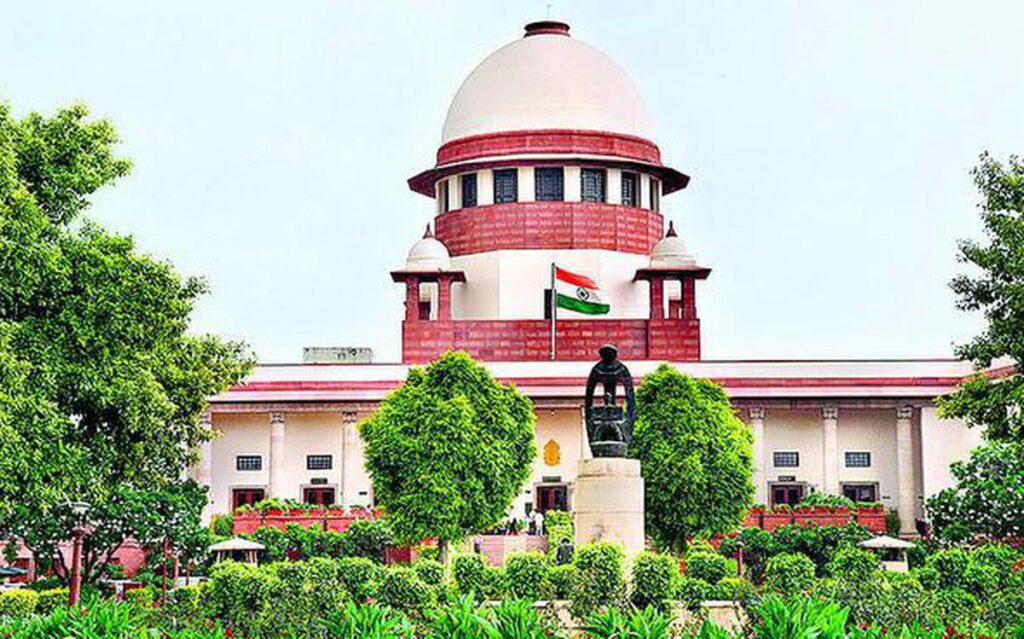
The Supreme Court has directed authorities across India to remove stray animals from sensitive public spaces such as hospitals, schools, railway stations, and bus terminals. The order comes amid rising concerns over public safety following frequent incidents of dog attacks and animal-related injuries. The court emphasized that while animal welfare must be protected, public safety and hygiene cannot be compromised in essential service areas.
Court’s Observation on Public Safety
The bench, hearing multiple petitions related to stray animal management, observed that civic authorities have a constitutional responsibility to ensure safe and clean public spaces. The justices stated that the presence of stray dogs, cattle, and other animals in hospitals, educational institutions, and transport hubs poses serious risks to citizens, especially children and the elderly.
The court added that such areas should remain strictly off-limits to stray animals, directing local bodies to take immediate and effective steps to relocate them to designated shelters.
A Balancing Act Between Safety and Welfare
While emphasizing the need to protect public safety, the Supreme Court also acknowledged the importance of humane treatment of stray animals. It instructed that removal operations must be carried out without cruelty and in line with existing animal protection laws. Authorities were reminded that stray dogs and cattle should be taken to recognized shelters, vaccinated, and sterilized as per the Animal Birth Control (ABC) Rules.
The court’s message was clear: both public welfare and animal rights must coexist, but not at the cost of endangering human lives or disrupting essential services.
Background: Rising Incidents of Stray-Related Injuries
India has witnessed a steady increase in incidents involving stray animals, particularly dogs, in recent years. Reports of dog attacks in residential colonies, school premises, and hospital areas have become more frequent, sparking public outcry. Several Tier 1 and Tier 2 cities, including Delhi, Pune, Hyderabad, and Nagpur, have struggled to balance stray control with compassion-driven approaches promoted by animal rights activists.
The Supreme Court noted that despite existing rules, many local bodies have failed to implement effective stray management programs. The lack of proper shelters and vaccination drives has worsened the problem, especially in densely populated urban areas.
Directive to Local Bodies and State Governments
The apex court has asked state governments and municipal corporations to submit a detailed compliance report on stray animal control measures. It emphasized accountability, warning that negligence could attract contempt proceedings. The court also suggested that states consider establishing more animal care centers and engage non-governmental organizations to ensure systematic management.
Urban planners and civic authorities have been urged to identify zones where strays can be safely rehabilitated without endangering the public. The order also seeks stronger coordination between veterinary departments, local NGOs, and municipal staff.
Public Reaction and Civic Challenges
The decision has received mixed reactions. Many citizens, particularly parents and healthcare workers, have welcomed the ruling as a necessary step toward ensuring safety in public spaces. On the other hand, animal welfare groups have called for careful implementation to prevent cruelty during the relocation process.
Municipal authorities face the dual challenge of enforcing the order efficiently while managing limited resources and space for animal shelters. Experts believe that long-term success will depend on vaccination drives, sterilization programs, and public awareness about responsible feeding practices.
Conclusion:
The Supreme Court’s directive to remove stray animals from sensitive public areas marks a crucial step toward addressing India’s growing urban safety concerns. As civic bodies move to implement the order, the challenge lies in achieving a humane, sustainable balance between animal welfare and public safety. The court’s intervention has put renewed focus on the need for stronger civic planning, accountability, and compassionate governance across Indian cities.