




Now Reading: Shashi Tharoor Revives Old Post on Delhi’s Air Crisis, Calls the Capital ‘Injurious to Health’
-
01
Shashi Tharoor Revives Old Post on Delhi’s Air Crisis, Calls the Capital ‘Injurious to Health’
Shashi Tharoor Revives Old Post on Delhi’s Air Crisis, Calls the Capital ‘Injurious to Health’

As Delhi’s air quality continues to deteriorate to alarming levels, Congress MP Shashi Tharoor has taken a sharp dig at the situation by reviving one of his older posts describing Delhi as “injurious to health.” His remark comes amid severe pollution levels choking the national capital, prompting renewed public debate over government accountability and citizens’ right to clean air.
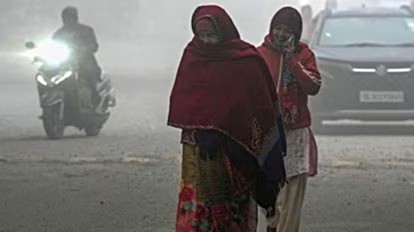
The timing of Tharoor’s post coincides with Delhi’s Air Quality Index (AQI) slipping deep into the “severe” category across most areas, affecting visibility, outdoor activity, and public health. The statement, though brief, reflects growing frustration among residents and leaders over the city’s recurring environmental emergency.
Delhi’s Air Quality Crisis Deepens
Over the past few weeks, Delhi and surrounding NCR cities have been enveloped in thick smog, with pollution levels far exceeding the safe limit. Data from monitoring agencies show PM2.5 and PM10 concentrations several times higher than the permissible range, raising health concerns, especially for children, the elderly, and people with respiratory conditions.
Hospitals across the capital have reported an increase in cases of breathlessness, eye irritation, and asthma-related complications. Schools have been forced to shift to online classes, and construction activities have been partially halted under the Graded Response Action Plan (GRAP) to curb rising emissions.
Tharoor’s Subtle Critique and Public Response
By resharing his earlier post, Shashi Tharoor used his characteristic wit to draw attention to Delhi’s chronic air pollution problem. Without naming any political party, his post was interpreted by many as a criticism of both central and state governments for failing to find a lasting solution to the annual crisis.
Social media users responded with a mix of agreement and frustration, highlighting how the problem has persisted for years despite multiple policy announcements. The post quickly gained traction online, sparking conversations about how India’s capital has become synonymous with hazardous air quality each winter.
Government Measures and Challenges Ahead
Authorities in Delhi and the central government have announced several short-term interventions, including vehicle restrictions under the odd-even scheme, tighter checks on construction dust, and increased deployment of anti-smog guns. However, experts say these are temporary solutions that do not address the root causes — particularly stubble burning in nearby states, unregulated industrial emissions, and rising vehicular traffic.
Environmental experts stress that a coordinated approach involving Delhi, Haryana, Punjab, and Uttar Pradesh is essential. They point out that shifting political blame without structural reforms has only led to repeating the same emergency every year.
The Broader Concern
Beyond Delhi, cities like Gurugram, Noida, Lucknow, and Ghaziabad have also reported poor to severe air quality, reflecting how pollution is no longer limited to the capital alone. For Tier 1 and Tier 2 cities, rapid urbanization, increased vehicle ownership, and industrial expansion have collectively worsened air quality across northern India.
Public health experts warn that prolonged exposure to such pollution can lead to chronic respiratory illnesses, reduced lung function, and cardiovascular issues. The World Health Organization considers air pollution one of the leading causes of premature death globally, and Delhi consistently ranks among the world’s most polluted capitals.
A Wake-Up Call for Collective Action
Shashi Tharoor’s pointed reminder may have been brief, but it underlines a larger truth — Delhi’s pollution crisis is not a seasonal inconvenience but a persistent public health emergency.
Until long-term solutions are implemented with strict accountability across states, Delhi’s air will remain hazardous. The city’s residents, meanwhile, continue to live through an annual struggle where stepping outside their homes feels increasingly “injurious to health.”