




Now Reading: Kerala Railway Police Launches Strict Screening Drive to Detect Drunk Passengers After Train Incident
-
01
Kerala Railway Police Launches Strict Screening Drive to Detect Drunk Passengers After Train Incident
Kerala Railway Police Launches Strict Screening Drive to Detect Drunk Passengers After Train Incident
Introduction:
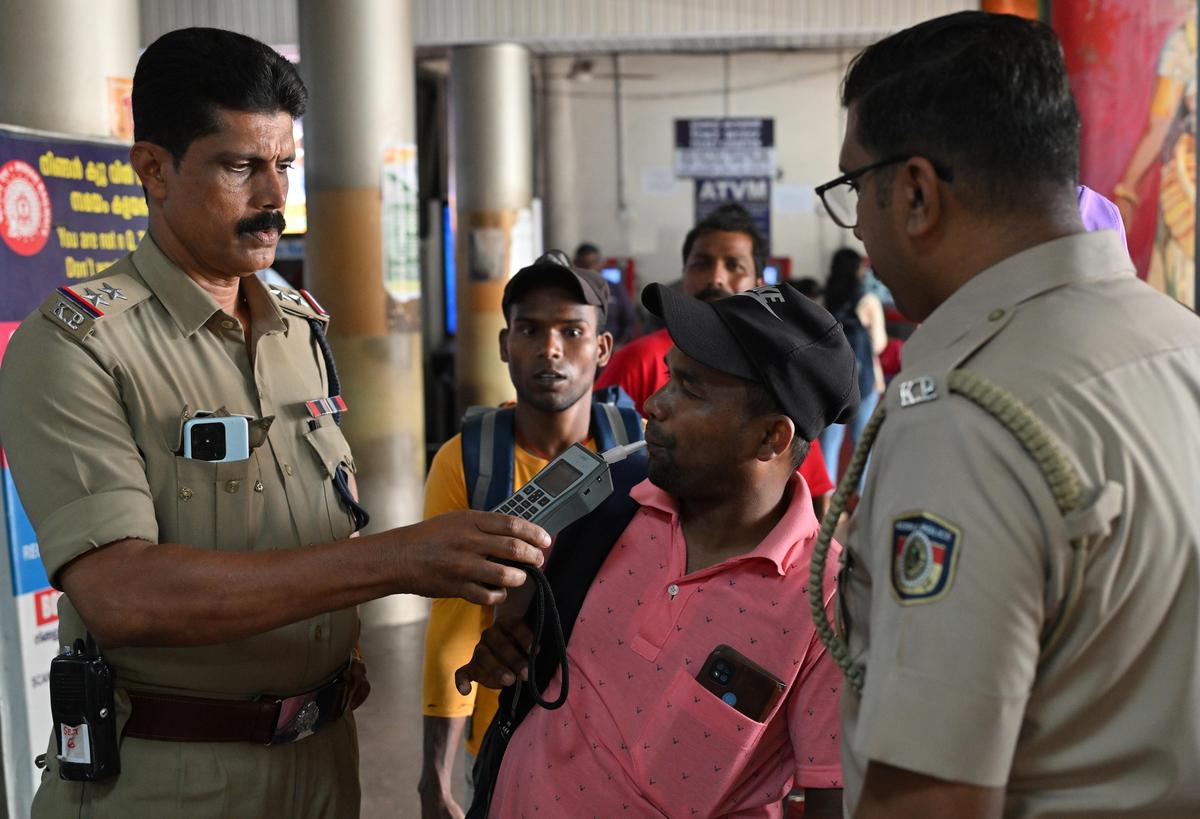
In response to a serious safety incident where an intoxicated man allegedly pushed a teenage girl off a moving train near Varkala, the railway police in Kerala have initiated a strict screening drive across multiple zones. The operation targets passengers boarding or travelling by train in Thiruvananthapuram, Ernakulam, Palakkad and Kozhikode divisions with the aim of enhancing safety and preventing similar episodes.
Background to the Drive
The drive comes on the back of growing concern over passenger safety on India’s railways, especially in states with high ridership from Tier 2 and 3 cities and towns. The incident near Varkala underscored the risks posed by drunken passengers onboard moving trains — a hazard for fellow travelers and railway staff alike. By launching the screening operation, authorities hope to curb such behaviour through early detection and deterrence.
How the Screening Operation Works
The railway police have deployed teams at major stations as well as on selected trains to identify passengers who may be under the influence of alcohol. Measures include random breathalyser tests, manual inspections and continuous monitoring of suspicious behaviour onboard. Notices have been displayed advising passengers about the screening and the consequences of being found intoxicated.
While the drive is currently focused on four major zones in Kerala, officials say the model may be replicated in other states if it proves effective. For commuters in smaller cities and towns that feed into the railway network, this could become a standard safety protocol in the near future.
Implications for Travellers and Rail Staff
For passengers from both Tier 1 and Tier 2 cities in South India, the operation represents a change in expectations around rail travel. On the one hand, travellers can anticipate greater safety and closer supervision. On the other, there may be added delays at boarding as screening takes place. Railway staff also face increased responsibilities, including handling passengers found intoxicated and coordinating with law-enforcement when necessary.
Some commuter associations have welcomed the move, saying that disruptive behaviour on trains has long been an issue, particularly during late-night journeys between smaller towns and metro cities. Others, however, have raised concerns about how the screening will be implemented and whether passengers’ rights will be respected.
Challenges and Possible Fallout
While the intention behind the screening drive is clear, its implementation comes with obstacles. Railway stations are often crowded, and conducting thorough checks without causing pipeline delays is a major task. Some travellers may see it as intrusive, especially in rural routes where formalities are fewer and travel informalities more common.
Furthermore, unless the screening is backed by proper legal frameworks and clear guidelines, there is a risk of inconsistent enforcement or profiling of passengers. For cities like Kochi, Thrissur or Palakkad, where many commuters rely on rail connectivity for work and education, the impact on daily schedules could be significant if boarding becomes slower.
Broader Context for Indian Rail Travel
India’s railways serve millions of passengers each day, many travelling from semi-urban and rural areas into metros and larger cities. Security and safety have always been priorities, yet less attention has been paid to passenger behaviour that affects others. The Kerala drive underlines a shift: authorities are no longer focusing only on infrastructure and punctuality but also on enhancing the travel environment itself.
If replicated nationwide, similar screening measures could influence rail travel norms in cities such as Pune, Hyderabad and Jaipur, where late-night and inter-city journeys are common. For travellers and policymakers alike, the question becomes how to balance efficient screening with comfortable access and passengers’ dignity.
Conclusion:
The Kerala railway police’s initiative to screen passengers for intoxication marks a noteworthy step toward improving safety onboard trains. While the process may introduce some inconvenience for passengers, the potential rewards—a safer, more pleasant travel experience—are significant. For India’s expanding network of rail commuters, especially in Tier 1 and Tier 2 cities, the success of this drive may shape the next era of passenger norms and expectations on the rails.