








Now Reading: US Aviation Faces Chaos: Over 10,000 Flight Delays and 2,700 Cancellations Amid Staff Shortages
-
01
US Aviation Faces Chaos: Over 10,000 Flight Delays and 2,700 Cancellations Amid Staff Shortages
US Aviation Faces Chaos: Over 10,000 Flight Delays and 2,700 Cancellations Amid Staff Shortages
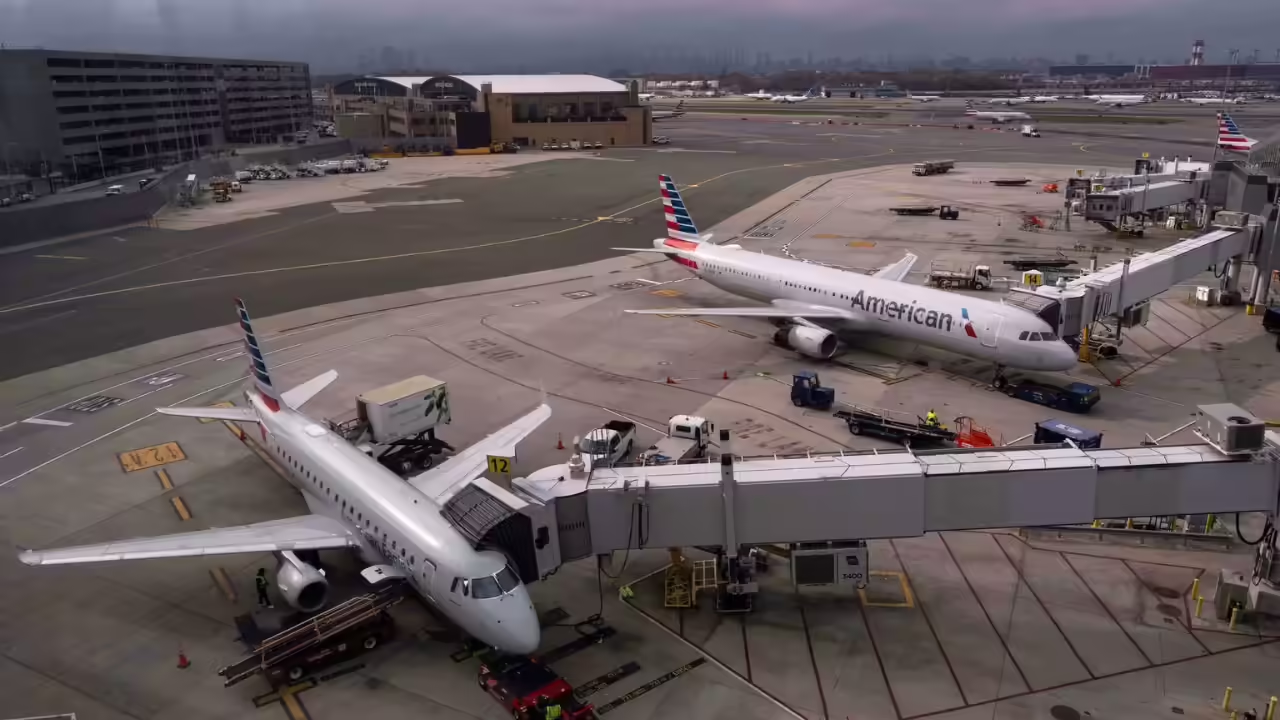
Introduction: The US aviation system experienced one of its worst days in recent history as over 10,000 flights were delayed and approximately 2,700 cancelled. The disruptions, attributed to staff shortages and operational challenges, affected major hubs across the country. Airlines and regulators scrambled to manage the crisis, highlighting vulnerabilities in air travel systems that could have indirect consequences for international routes, including flights connecting Tier 1 and Tier 2 Indian cities to the United States.
Scope of the Disruption
Airlines across the US faced severe operational hurdles, with major airports such as Chicago O’Hare, Atlanta, and New York’s JFK witnessing significant delays. Staff shortages in air traffic control and airline operations compounded the problem, leading to a backlog of flights and mounting frustration among passengers. Domestic carriers reported difficulties in meeting schedules, while international flights faced knock-on effects, including delayed arrivals and departures.
Impact on Travelers
Passengers bore the brunt of the chaos, with long queues, missed connections, and disrupted travel plans. Many travelers had to reschedule flights or face extended waiting periods at airports. Indian nationals and business travelers heading to the US from cities like Delhi, Bengaluru, and Mumbai experienced indirect delays due to the cascading effect of cancellations and slot adjustments in international airspace.
FAA and Airline Response
The Federal Aviation Administration (FAA) intervened by authorizing adjustments in flight schedules and prioritizing certain routes to reduce congestion. Airlines implemented contingency plans, including crew reassignments and revised boarding schedules. Despite these measures, operational capacity remained strained, underscoring the challenge of balancing staffing limitations with high passenger demand during peak travel periods.
Broader Implications for Global Air Travel
The US aviation crisis has broader implications for global air connectivity. Flights connecting India to the US are particularly sensitive to delays in American airspace, potentially affecting business travel, student travel, and tourism. Tier 1 cities with heavy international traffic, such as Delhi and Mumbai, may see ripple effects in scheduling and ticket pricing, while Tier 2 cities relying on connecting flights may experience longer transit times.
Looking Ahead
Experts suggest that structural reforms in staffing, scheduling, and operational efficiency are necessary to prevent similar disruptions. Airlines are exploring technology-driven solutions, flexible crew deployment, and enhanced coordination with air traffic control to strengthen resilience. Passengers are advised to monitor flight updates closely and plan for contingencies amid ongoing operational uncertainties.
Conclusion
The US aviation system’s recent disruptions serve as a stark reminder of the fragility of global air travel networks. While airlines and regulators take steps to restore normalcy, the incident highlights the need for robust planning and contingency measures. For Indian travelers, particularly those flying from Tier 1 and Tier 2 cities, awareness and proactive planning remain essential to navigate potential delays and ensure smoother international journeys.