




Now Reading: Environment: How Farms, Stubble Burning And Weather Converge To Trigger Delhi Smog
-
01
Environment: How Farms, Stubble Burning And Weather Converge To Trigger Delhi Smog
Environment: How Farms, Stubble Burning And Weather Converge To Trigger Delhi Smog
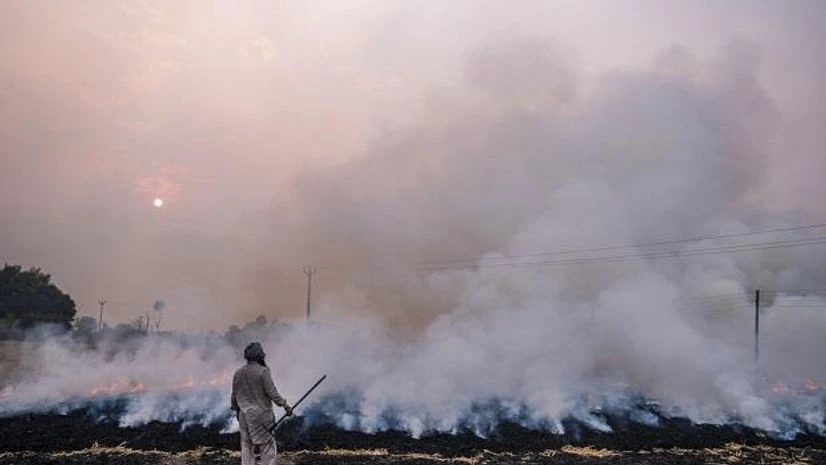
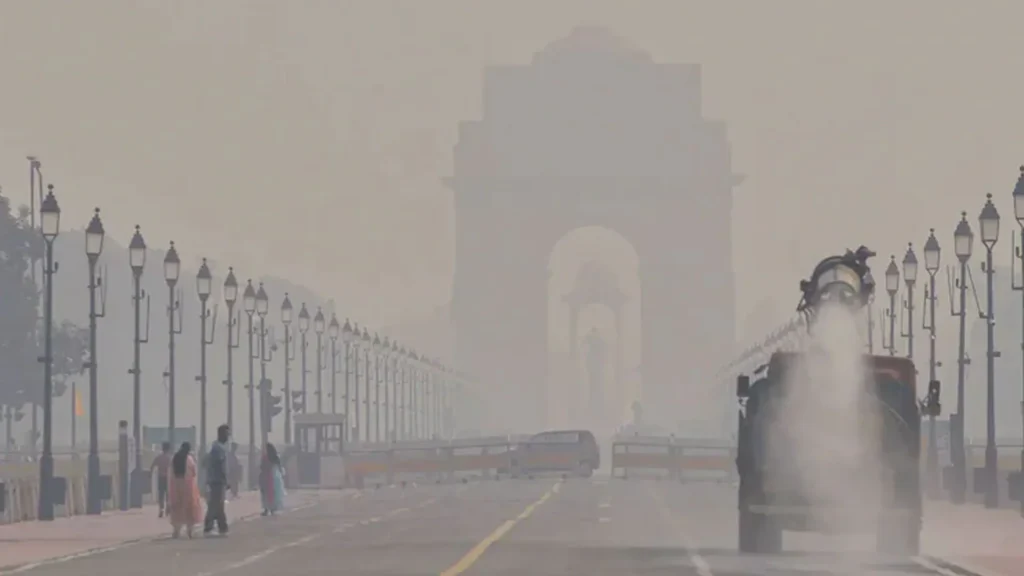
Every year, as autumn ends, Delhi’s air quality nosedives to dangerous levels. While vehicles and construction add to the pollution, the main seasonal accelerators are farm stubble burning, specific weather patterns, and surface-level temperature changes. Together, they trap pollutants and create the thick, grey smog choking the capital.
The perfect storm behind Delhi’s smog crisis
The main keyword “Delhi smog” appears here. Delhi’s annual smog crisis is not a sudden event—it is a complex combination of human and climatic factors. During late October and November, farmers across Punjab, Haryana, and western Uttar Pradesh burn leftover paddy stubble to clear fields for wheat sowing. The smoke mixes with urban pollutants from vehicles, industries, and dust. With the onset of cooler weather, weaker wind speeds and thermal inversion trap these particles close to the surface, forming a dense pollution layer that envelops the city. The Air Quality Index (AQI) regularly breaches 400-450, classed as “severe” by India’s Central Pollution Control Board (CPCB).
Stubble burning: the largest seasonal contributor
Under the secondary keyword “Punjab stubble burning,” farm fires remain the single most visible trigger. Satellite data from the Indian Space Research Organisation (ISRO) shows more than 28,000 active fire points in Punjab and Haryana during peak harvest weeks of November 2025. Farmers burn nearly 15 to 20 million tonnes of crop residue annually due to limited time between rice harvesting and wheat planting. Despite subsidies for crop residue management equipment like Happy Seeders and Super-Straw Management Systems, adoption remains uneven because of cost, availability, and logistical constraints. The smoke travels over 250 kilometers, carried by northwesterly winds into Delhi, amplifying existing pollution.
Weather dynamics worsen the effect
The secondary keyword “weather and air quality Delhi” fits here. Meteorological conditions during early winter make Delhi’s pollution particularly stubborn. Cooler nights create temperature inversion—where a layer of warm air sits atop cooler surface air—preventing vertical dispersion of pollutants. Wind speeds drop below 10 km/h, and high humidity binds fine particulate matter (PM2.5 and PM10) into heavier, sticky clusters. The result is the persistent haze that often lasts for days, even when external emissions temporarily decline. Experts note that the city’s geographical position, bounded by the Aravalli hills and the Yamuna floodplain, also limits pollutant dispersal.
Urban emissions: the year-round baseline
Even without stubble burning, Delhi’s own emissions keep its AQI high for much of the year. According to the Delhi Pollution Control Committee (DPCC), vehicular pollution contributes 35-40 percent of PM2.5 levels during peak traffic hours. Construction dust, industrial activity in NCR, and residential generators add another 25-30 percent. This baseline pollution means that when external smoke enters the mix, air quality collapses almost immediately. In 2024, the Delhi-NCR region registered more than 120 days of “poor” air quality, even before stubble-burning season began. Electric vehicle adoption and construction regulations have improved emissions marginally, but the scale of urban growth continues to offset these gains.
Policy measures and enforcement challenges
The government enforces the Graded Response Action Plan (GRAP) every winter, scaling up restrictions as air quality worsens. Under GRAP-3, bans include construction, certain vehicle categories, and non-essential industrial activity. Punjab and Haryana deploy “red teams” to monitor farm fires, and fines are imposed under the Air (Prevention and Control of Pollution) Act. Yet enforcement gaps persist. Many farmers argue that mechanized residue management remains costly and time-consuming. State-level coordination between agricultural, environment, and rural departments often breaks down, weakening accountability. Meanwhile, long-term solutions such as shifting cropping patterns away from paddy toward less water-intensive and residue-heavy crops like maize or millets face political and economic barriers.
The health and economic cost of seasonal smog
Under the secondary keyword “Delhi air pollution health impact,” public health experts link the smog season to a surge in respiratory and cardiovascular problems. Hospitals across Delhi report a 25–30 percent increase in respiratory admissions each November. Long-term exposure to high PM2.5 levels reduces lung capacity, increases asthma incidence, and contributes to premature deaths. The World Health Organization estimates that air pollution costs India nearly 1.4 percent of its GDP annually through lost productivity and healthcare expenses. For Delhi residents, winter has become synonymous with masks, air purifiers, and restricted outdoor activities—a way of life rather than a short-term inconvenience.
What can change the cycle
Breaking the Delhi smog cycle requires coordinated interventions. Experts recommend a mix of incentives and penalties to phase out stubble burning, stronger monitoring of emission sources, and strict adherence to industrial norms. Expanding the use of electric public transport, enforcing dust control on construction sites, and accelerating crop diversification programs in Punjab and Haryana can deliver tangible results. Weather patterns cannot be controlled, but emissions feeding into them can be reduced substantially if governance mechanisms stay consistent year-round rather than seasonal.
Takeaways
- Delhi’s smog results from the convergence of stubble burning, urban emissions, and winter weather conditions.
- Punjab and Haryana’s crop residue fires remain the largest seasonal source of pollution entering NCR.
- Temperature inversion and low wind speeds trap pollutants, worsening smog intensity.
- Structural solutions must combine agricultural reform, emission control, and consistent enforcement beyond the winter season.
FAQs
Q. Why does Delhi’s air quality worsen every winter?
Because colder temperatures, calm winds, and stubble burning combine to trap pollutants at the surface, turning normal pollution into dense smog.
Q. How much of Delhi’s pollution comes from stubble burning?
Estimates vary yearly, but during peak fire days in November, stubble burning can contribute up to 30–40 percent of Delhi’s PM2.5 concentration.
Q. What are the government’s key measures to tackle smog?
Actions under GRAP include restricting vehicles, banning construction, promoting crop residue management, and using smog towers and sprinklers in critical zones.
Q. Is there a long-term solution to Delhi’s smog problem?
Yes, reducing stubble burning through technology, crop diversification, sustainable transport, and continuous pollution control enforcement can gradually reverse the trend