




Now Reading: Delhi blast probe arrests Kashmir man linked to Red Fort explosion
-
01
Delhi blast probe arrests Kashmir man linked to Red Fort explosion
Delhi blast probe arrests Kashmir man linked to Red Fort explosion
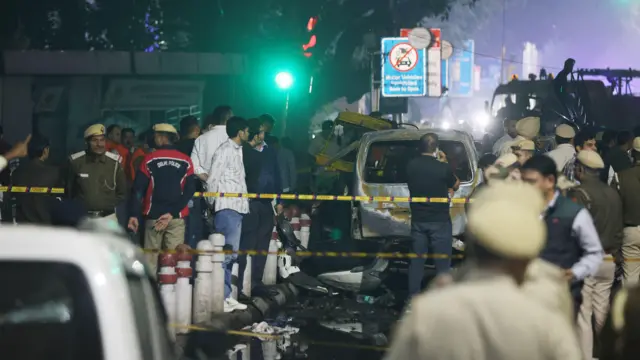
The National Investigation Agency (NIA) has arrested Amir Rashid Ali, a resident of Jammu and Kashmir, in connection with the car-bomb explosion near the Red Fort metro station on November 10 that killed 13 people and injured dozens. Ali is said to have facilitated the vehicle purchase used in the attack.
What happened and investigation details
On November 10, a white Hyundai i20 exploded near the Red Fort Metro station in Delhi during evening hours, killing 13 and injuring over 30. The massive blast and the forensic profile triggered the government to designate the incident as a terror attack. The vehicle was later determined to have been used as a car-borne improvised explosive device (IED).
In the latest breakthrough, the NIA arrested Amir Rashid Ali from Delhi. He is a resident of Samboora in Pampore (Pulwama district, J&K). The investigation asserts the Hyundai i20 was registered in his name and he travelled to Delhi to facilitate its purchase. Forensic analysis established that the driver of the IED vehicle was Umar Un Nabi, an assistant professor of medicine at a private university in Faridabad, who died in the blast.
Multiple states now are involved in coordinated raid operations, and the probe is tracking an alleged “white-collar” terror module said to have been active since 2022, linking professionals, doctors and other educated individuals.
Why this matters for national security
The attack location — near a high-security iconic site in the national capital — raises major alarm about domestic terror capabilities and the use of vehicle-borne IEDs inside urban spaces. The registration of the vehicle under a Kashmir resident’s name indicates cross-regional logistics and support networks. The involvement of a university doctor further shifts the profile of suspects from traditional militants to professionals with cover identities.
For Delhi and national security agencies, this means revisiting guard levels around monuments, traffic chokepoints, parking-zones and re-evaluating surveillance of vehicles registered in remote locations but operating in the capital. The fact that the bomber used high-security zones en route (as investigators traced via over 1,300 CCTV cameras) underscores how thin gaps in surveillance or checkpoints can be exploited.
What the investigation is targeting next
• Tracing the full module: NIA is expanding investigation to multiple states — Delhi, Haryana, Punjab, Uttar Pradesh, Madhya Pradesh and Jammu & Kashmir — to map out suspects, logistics and funding.
• Checking foreign links: Sources indicate potential links to banned organisation Jaish‑e‑Mohammed (JeM) and a planned “Operation D-6” fidayeen attack for December is under probe.
• Vehicle and explosives chain: The vehicle purchase, its registration, movement via several high-security zones, blast site forensic evidence (ammonium nitrate-fuel oil mix) all form part of the chain investigators are reconstructing.
Implications for policy and public safety
This incident sends several signals: urban terror threat remains real even in high-security capitals; registration and use of everyday vehicles as bombs must be plugged via tighter vehicle intelligence and cross-region tracking; screening of professionals (especially those with access or mobility) must be strengthened. It also suggests that radicalisation may increasingly involve educated individuals with insider cover — complicating profiling and counter-terror efforts.
For Delhi residents and visitors, it means heightened vigilance around heritage sites, parking zones, large gatherings and the need for explosive detection systems in dense urban pockets. On the governmental side, the blast will accelerate reviewing metro station perimeter security, parking-lot checks near tourist/heritage areas and inter-state vehicle monitoring.
Takeaways
- The arrest of Amir Rashid Ali marks the first major breakthrough in the Red Fort blast case and underscores cross-region logistical support for terror attacks.
- The use of a vehicle-borne IED in a high-profile location signals elevated threat levels and a shift toward audacious urban attacks.
- The involvement of educated professionals in the terror module blurs conventional profiling and demands revisiting background checks and monitoring protocols.
- Public and policy-level fallout will likely lead to tighter vehicle tracking, increased security around heritage zones, and more aggressive inter-state counter-terror collaboration.
FAQs
Q1: When and where did the blast occur?
The explosion happened on November 10 near the Red Fort Metro station in Delhi at approximately 6:52 pm IST inside a Hyundai i20.
Q2: Who has been arrested so far?
The NIA has arrested Amir Rashid Ali, a Kashmir resident whose name was on the vehicle registration used in the blast, and he is suspected of aiding the suicide bomber Umar Un Nabi.
Q3: How was the vehicle and bomber identified?
Forensic evidence established the identity of the deceased driver as Umar Un Nabi. Vehicle-tracing and CCTV footage mapped his route through high-security zones, and the car was registered under Ali’s name.
Q4: Are there any known organisational links?
Investigators have flagged a suspected JeM-linked “white-collar” terror module active since 2022 and are probing foreign connections and planned attacks.