




Now Reading: G20 Summit Opens In Johannesburg Amid Strengthening India Africa Trade Push
-
01
G20 Summit Opens In Johannesburg Amid Strengthening India Africa Trade Push
G20 Summit Opens In Johannesburg Amid Strengthening India Africa Trade Push
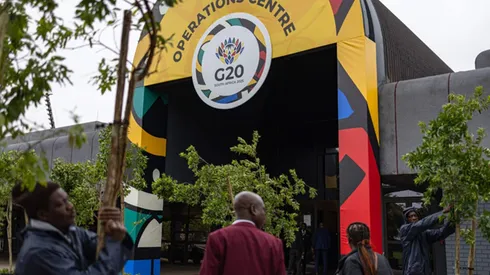
The G20 summit in Johannesburg has officially begun, placing the main keyword G20 summit Johannesburg at the centre of global diplomatic attention. This year’s meeting carries added significance for India as it pushes to deepen economic, technology and development partnerships with African nations during a period of shifting geopolitical alignments.
India enters the summit with an agenda focused on supply chain diversification, digital public infrastructure partnerships, energy security and expansion of south south trade. African countries, many of which are experiencing rapid demographic and economic shifts, are looking to strengthen ties with India beyond traditional sectors like pharmaceuticals and education.
Why India is intensifying its engagements with Africa
India’s Africa strategy is driven by shared development priorities and complementary economic strengths. Africa’s growing consumer base and natural resources align with India’s demand for new markets, energy diversification and long term investment opportunities.
Trade between India and Africa has grown steadily over the past decade, with sectors like agriculture, automobiles, pharmaceuticals, ICT services and infrastructure emerging as strong pillars. Indian companies have expanded their presence in African telecom, fintech, consumer goods and renewable energy segments.
At the political level, India’s outreach aims to deepen cooperation on multilateral reforms, climate financing, digital transformation and health resilience. Johannesburg offers a platform to advance these discussions with African leaders present under the G20 expanded engagement model.
What the summit means for India’s trade diplomacy
For India, the G20 provides a strategic moment to highlight its role as a bridge between developed economies and the Global South. During the Johannesburg sessions, India is expected to emphasise the need for inclusive global economic governance, greater representation for emerging markets and accessible technology transfer.
Trade diversification remains a priority. India wants to expand export markets for goods such as machinery, textiles, automotive components and drones, while importing key minerals critical for green technology supply chains. African countries hold several such strategic minerals, making bilateral partnerships vital for India’s long term climate and technology ambitions.
India is also working on improving trade logistics, building port connectivity, and supporting capacity building programmes that help African economies adopt India’s digital public infrastructure models.
Key themes shaping discussions at the Johannesburg G20
The summit’s agenda is anchored around economic recovery, sustainable development, climate resilience and global conflict risks. India is expected to support proposals for stable energy markets, improved access to climate finance, and strengthened cooperation in global health systems.
Energy security is a central theme. India will push for diversified energy partnerships with African nations in solar, green hydrogen and grid technologies. These partnerships serve both climate and economic priorities for India while supporting Africa’s growing energy needs.
Digital transformation is another major topic. India’s expertise in digital public goods such as UPI-like payment frameworks, identity systems and e-governance platforms is generating interest across Africa. The summit provides an opportunity to formalise collaborations on technology stacks that support financial inclusion and governance efficiency.
Geopolitical context and India’s positioning
The global backdrop of geopolitical tensions, conflict-driven commodity volatility and supply chain disruptions makes this year’s G20 particularly consequential. India’s role has expanded as a stabilising voice advocating for multipolar cooperation.
Coordination with African nations is also part of India’s broader effort to counterbalance dominant geopolitical blocs. Through developmental projects, scholarships, capacity building and defence cooperation, India positions itself as a long term and reliable partner for African stakeholders.
At Johannesburg, India’s call for multilateral reform, including stronger Global South representation in global financial institutions, resonates with African leaders who have been demanding more equitable decision making authority.
Opportunities and challenges in the India Africa trade trajectory
The India Africa trade push comes with strong opportunities but also clear challenges. Infrastructure gaps, regulatory differences and logistics bottlenecks in several African markets create hurdles for smooth trade expansion.
On the opportunity side, sectors like renewable energy, agricultural technology, pharmaceuticals, fintech and mining offer strong growth potential. India’s companies are increasingly exploring joint ventures, local manufacturing and skill development to build long term roots in African economies.
The G20 summit provides a stage to address issues such as financing barriers, technology access and climate adaptation, which are crucial for fostering sustainable India Africa commerce.
Takeaways
- The G20 summit in Johannesburg opens with India prioritising deeper economic and development partnerships across Africa.
- India aims to leverage the summit to push trade diversification, digital public infrastructure cooperation and energy security collaborations.
- Africa’s growing consumer base and strategic mineral resources make it central to India’s long term economic and climate strategies.
- Opportunities in India Africa trade are strong but require addressing logistical and regulatory challenges for sustainable growth.
FAQs
Q: Why is India focusing heavily on Africa during this G20 summit?
A: Africa’s economic potential, strategic minerals, growing markets and alignment with India’s development goals make it a central partner in India’s long term strategy.
Q: What sectors are likely to see India Africa trade growth?
A: Renewable energy, agriculture, pharmaceuticals, automotive components, fintech, telecom services and mining are key growth areas.
Q: How does the G20 help India’s diplomatic agenda?
A: It provides a global platform to advocate for inclusive governance, emphasise Global South priorities and strengthen bilateral connections with emerging economies.
Q: What challenges could slow India Africa trade expansion?
A: Infrastructure gaps, regulatory differences, logistics hurdles and financing constraints remain areas requiring sustained cooperation.