






Now Reading: Cyclone Ditwah aftermath heavy rains force school closures in Tamil Nadu and Puducherry
-
01
Cyclone Ditwah aftermath heavy rains force school closures in Tamil Nadu and Puducherry
Cyclone Ditwah aftermath heavy rains force school closures in Tamil Nadu and Puducherry
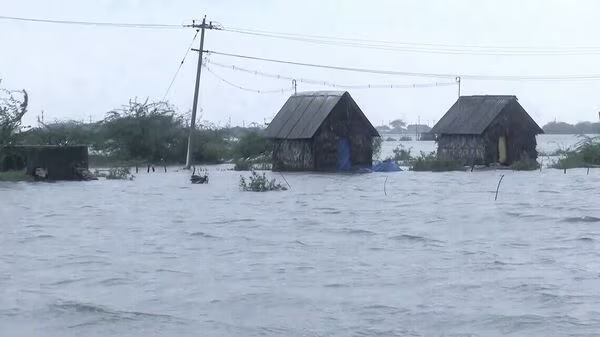
Cyclone Ditwah aftermath has resulted in heavy rains that forced school closures across several districts in Tamil Nadu and Puducherry. The main keyword has become the central focus for local authorities as they respond to flooding, transport disruption and safety risks affecting students and residents.
The weather system moved inland after weakening, but trailing rain bands caused intense overnight downpours. Municipal teams have been deployed for water clearing operations while district administrations continue monitoring vulnerable zones.
Rains intensify across coastal districts as authorities assess impact
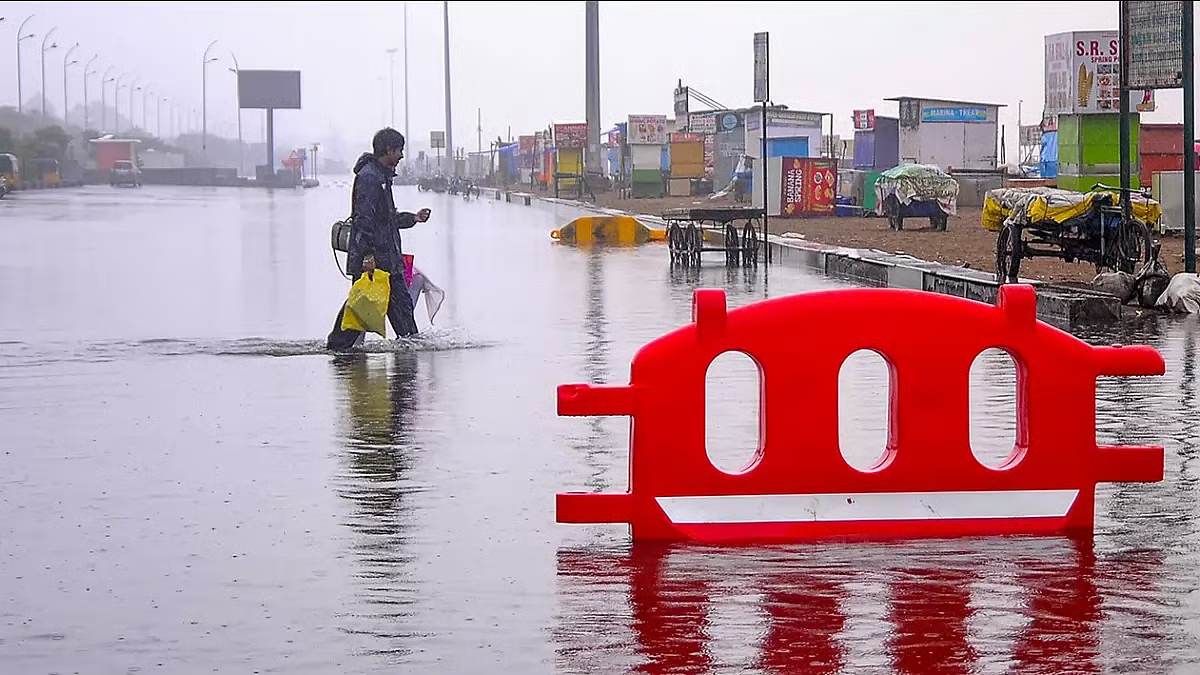
Several coastal and interior districts recorded heavy to very heavy rainfall as the cyclone’s remnants passed over the region. Chennai, Cuddalore, Villupuram, Chengalpattu, Kancheepuram and Tiruvallur reported waterlogging in low lying areas. Puducherry and Karaikal faced similar conditions with road closures in pockets where rain accumulation crossed safety thresholds.
Administrations declared holiday for schools to avoid exposing children to waterlogged roads, unstable trees, damaged electric poles and disrupted public transport. Education departments issued advisories asking parents to avoid unnecessary travel and keep children indoors until conditions stabilise.
Disaster management teams have been stationed in flood prone areas. Teams are clearing fallen branches, unclogging drains and assisting in relocating families from homes affected by seepage or overflowing canals. The cyclone’s wind speed may have weakened, but sustained rains continue to create challenges for emergency responders.
Transport disruptions affect daily routines across Tamil Nadu and Puducherry
Road connectivity has been affected as several stretches experienced water accumulation beyond permissible limits. Bus services in parts of Cuddalore, Puducherry and north coastal Tamil Nadu were delayed or rerouted. Suburban train services in Chennai ran with caution, with some delays due to signal checks and track inspection.
Air travel saw temporary slowdowns during peak rainfall hours, although major cancellations were avoided. Passengers were advised to reach airports early due to slowed city traffic. Auto rickshaw and taxi services surged in demand as regular bus frequencies dropped in waterlogged pockets.
Fishermen in the Tamil Nadu and Puducherry coastline remain under strict advisories. Even after the cyclone weakened, rough sea conditions persist. Harbours are operating under restricted movement orders, and authorities continue to caution fishing communities against venturing into the sea.
Electricity and civic teams work to restore services
Power supply interruptions were reported in multiple locations due to precautionary shutdowns or damage to distribution lines. Electricity board teams are restoring supply after inspecting transformers and ensuring safety in flooded streets. Priority is being given to hospitals, water pumping stations and dense residential areas.
Civic bodies have deployed additional pumps to clear stagnant water. In some districts, stormwater drainage capacity was stretched due to continuous overnight rainfall. Municipal workers are removing silt blocks and managing traffic diversions to avoid vehicles entering flooded zones.
Residents in low lying settlements reported minor inundation, prompting temporary relocation in a few cases. Relief centres remain on standby as weather forecasts indicate rain continuation in specific belts for the next 24 to 48 hours.
Schools expected to reopen once weather stabilises
Education departments in Tamil Nadu and Puducherry have clarified that reopening decisions will depend entirely on safety assessments. District collectors will review rainfall intensity, road conditions and updated forecasts before issuing further instructions. Some districts with moderate impact may resume classes sooner, while others could extend closures if water stagnation persists.
Online classes are not being mandated at this stage to avoid placing additional burden on households facing weather related disruptions. Schools have been advised to review campus safety, check electrical systems, inspect damaged trees and ensure playground drainage before resuming operations.
Parents are expected to receive district wise updates through official channels. Rumours and unverified announcements are being discouraged, and residents are directed to rely only on district administration bulletins.
Weather forecast indicates continued rainfall in select regions
Meteorological analysts report that the remnants of Cyclone Ditwah may produce intermittent rain as the system travels inland. While wind speeds have significantly reduced, moisture laden cloud bands continue to influence coastal and adjoining districts.
Authorities are monitoring river levels, particularly in basins where upstream flow has increased. Dam management teams are coordinating release schedules to avoid sudden surges in downstream areas. Fishermen, farmers and transport operators have been asked to stay alert to forecast updates.
Residents are advised to avoid flooded roads, check for official alerts and report fallen trees or infrastructure damage to local control rooms. With the northeast monsoon still active, the region may continue to face weather variations through the week.
Takeaways
Heavy rains from Cyclone Ditwah aftermath led to school closures in Tamil Nadu and Puducherry.
Transport disruptions, waterlogging and power interruptions affected multiple districts.
Emergency teams are clearing roads, restoring supply and assisting affected households.
Authorities will decide reopening schedules based on updated safety assessments and weather forecasts.
FAQs
Why were schools closed in Tamil Nadu and Puducherry?
Because heavy rainfall from the Cyclone Ditwah aftermath created unsafe travel conditions, including flooding, fallen branches and disrupted transport.
Will schools reopen tomorrow?
Reopening depends on district wise assessments. Authorities will announce decisions based on weather, road safety and waterlogging levels.
Is the cyclone still active?
No. The cyclone has weakened, but its trailing rain bands continue to produce significant rainfall across coastal and interior districts.
Which areas are most affected?
Chennai, Cuddalore, Villupuram, Puducherry, Karaikal and surrounding districts reported heavy rain, waterlogging and transport delays.