









Now Reading: Reserve Bank of India cuts repo rate to 5.25 percent as markets prepare for rally
-
01
Reserve Bank of India cuts repo rate to 5.25 percent as markets prepare for rally
Reserve Bank of India cuts repo rate to 5.25 percent as markets prepare for rally
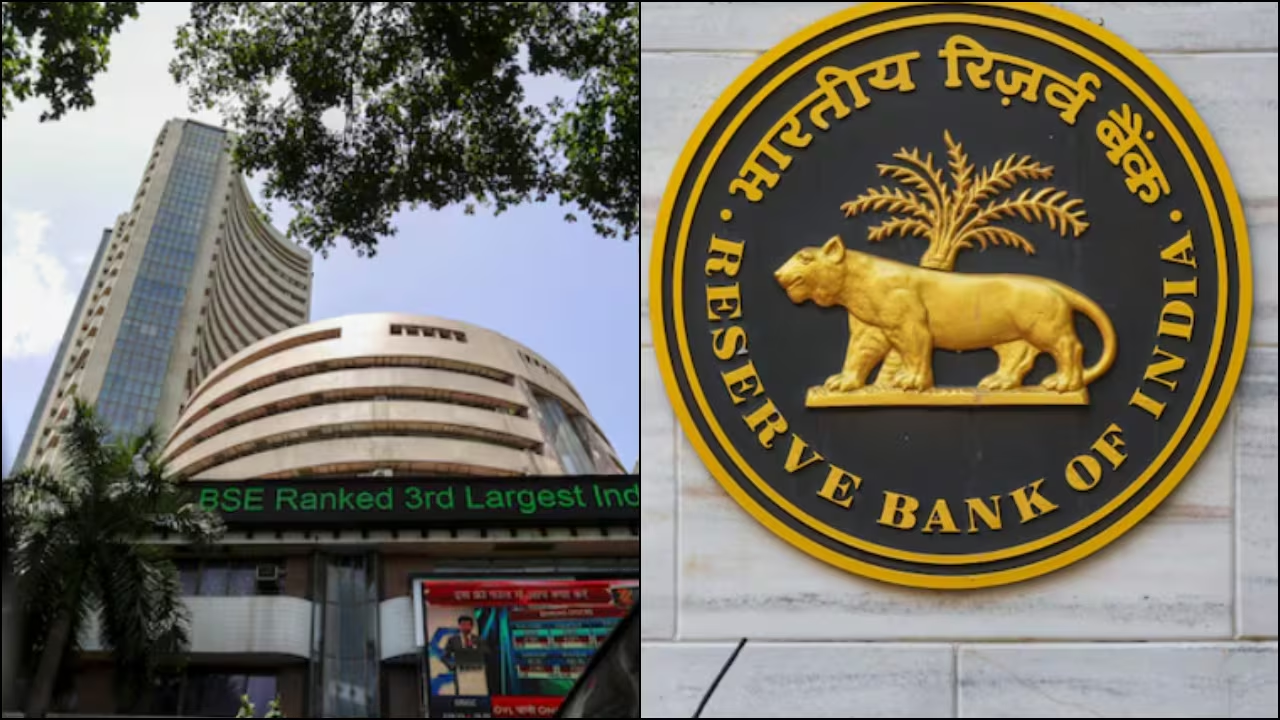
The RBI rate cut to 5.25 percent has shifted market expectations across lending, borrowing and equity flows, with investors anticipating short term volatility and medium term easing in financial conditions. The decision reflects the central bank’s assessment that inflation risks have moderated while growth indicators remain uneven.
RBI policy signals a controlled easing cycle
The key policy signal from the RBI rate cut is that the central bank is moving into a controlled easing cycle while avoiding excessive liquidity expansion. The Monetary Policy Committee noted that headline inflation has softened due to stable food prices and steady fuel costs. Core inflation has also trended lower, reducing pressure on retail consumers and manufacturers. However, the RBI avoided aggressive easing because services inflation and global commodity risks still require caution. By cutting the repo rate to 5.25 percent, the RBI aims to reduce borrowing costs for productive sectors without triggering a surge in speculative credit. Banks are expected to adjust lending rates gradually through the MCLR and repo linked products, but transmission will vary based on individual balance sheet positions. The decision also reflects the central bank’s willingness to support growth at a time when industrial output indicators show mixed momentum.
Market reaction and equity sentiment strengthen
The secondary keyword market rally is central to understanding investor sentiment after the rate cut. Equity markets opened with increased optimism as rate sensitive sectors such as banking, real estate and autos recorded early gains. Lower borrowing costs tend to improve credit offtake, lift housing demand and support vehicle sales. Foreign institutional investors also interpret rate cuts as a sign of policy stability, especially when inflation is under control. Mid cap and small cap indices showed sharper movements, a pattern seen in previous easing cycles. The bond market responded with a drop in yields for short duration segments, reflecting expectations of cheaper liquidity. Long term yields remained more stable because the RBI did not announce major liquidity injections. Currency markets held steady as traders had already priced in the possibility of a modest cut based on recent inflation data. The overall sentiment suggests that investors view the move as growth supportive rather than inflationary.
Impact on borrowers, EMIs and consumer spending
For households, the rate cut has direct implications for EMIs and consumer spending. Banks are likely to reduce rates on home loans and select personal loans tied to the repo benchmark. The speed of transmission will depend on competition among lenders and liquidity conditions in the banking system. A 25 basis point reduction can lower EMIs marginally, but the cumulative effect becomes meaningful if further cuts follow. Lower borrowing costs may revive demand in urban housing markets that have shown strong launches but slower conversions in recent months. For small businesses, reduced credit costs can support working capital, especially in sectors affected by higher input prices. Consumer spending may improve during the first quarter of the next financial year as liquidity conditions ease and sentiment strengthens.
Growth risks and inflation management remain central
Even with the rate cut, the RBI signalled that inflation management remains its primary mandate. Recent food inflation spikes in vegetables and cereals remain a concern, and supply disruptions can trigger sudden increases. The central bank highlighted that global uncertainty, including energy price volatility and shipping route disruptions, may affect domestic price stability. Growth projections remain stable but not uniformly strong across sectors. Manufacturing and construction show resilience, but exports are still sensitive to global demand cycles. Services growth is steady but faces margin pressures due to rising wage costs. The calibrated cut reflects the RBI’s attempt to balance these risks while supporting credit flow. Analysts expect the central bank to maintain a data driven approach and avoid back to back rate cuts unless inflation falls further below the medium term target.
Banking sector and liquidity outlook evolve
The banking sector enters the next quarter with improved liquidity due to the RBI’s recent operations in debt and forex markets. The rate cut adds additional support by lowering funding costs. However, banks remain cautious because deposit growth has lagged credit growth, forcing lenders to offer higher deposit rates to attract liquidity. This limits how quickly lending rates can drop. The central bank is monitoring liquidity spreads to prevent mispricing of credit risk. For NBFCs, the cut reduces refinancing pressure and helps maintain stable borrowing costs. The corporate bond market may see increased issuance as companies lock in lower rates for long term projects. These shifts will determine how fast monetary transmission improves across the system.
Takeaways
RBI cut the repo rate to 5.25 percent to support controlled easing.
Markets responded with gains in rate sensitive sectors and improved liquidity sentiment.
Borrowers may see gradual EMI reductions as banks adjust lending rates.
Inflation risks and uneven growth will guide further RBI actions.
FAQs
Why did the RBI cut the repo rate now
The central bank assessed that inflation pressures have eased and growth indicators need support, making a moderate rate cut appropriate without risking price instability.
Will home loan EMIs fall immediately
EMIs may reduce for loans linked to the repo benchmark, but the timing depends on how quickly banks transmit the rate cut into lending products.
How will markets react in the coming weeks
Equity sentiment may remain positive, especially in banking and real estate, but global factors and liquidity conditions will influence short term movements.
Does this cut signal more reductions ahead
Further cuts will depend on sustained low inflation and consistent growth data. The RBI is likely to move cautiously to maintain stability.