








Now Reading: Government unveils carbon capture R&D roadmap for 2070 net zero target
-
01
Government unveils carbon capture R&D roadmap for 2070 net zero target
Government unveils carbon capture R&D roadmap for 2070 net zero target
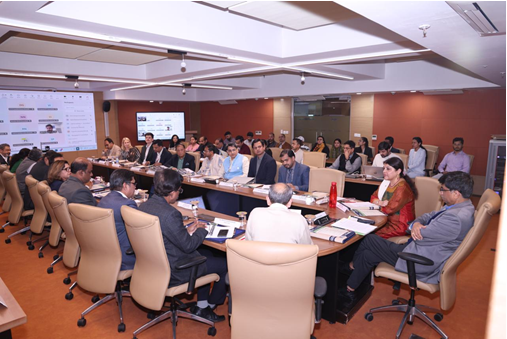
India’s government has unveiled a new carbon capture R&D roadmap aimed at accelerating technologies required for achieving the 2070 net zero target. The announcement marks a major policy step as carbon capture becomes central to long term emissions reduction, industrial transition and energy security planning.
The roadmap outlines priority research areas, pilot deployment strategies and industry collaboration models. Carbon capture, utilisation and storage technologies are considered essential for hard to abate sectors such as steel, cement, petrochemicals and thermal power. India’s emissions profile makes these technologies critical for cutting industrial carbon output while sustaining economic growth.
Focus areas in the national carbon capture roadmap and industrial emissions
The roadmap identifies high impact research areas covering capture efficiency, cost reduction and storage validation. Hard to abate industries currently contribute a significant share of India’s carbon emissions. Integrating carbon capture into steel and cement production is one of the most challenging tasks, given the scale and continuous nature of these processes. Research will prioritise solvent based systems, membrane separation technologies and advanced sorbents. The government plans to support early stage research as well as industry scale test beds.
Industrial clusters across states such as Gujarat, Maharashtra and Odisha are expected to play an important role in hosting pilot projects. These regions already have large industrial estates and access to energy infrastructure, making them suitable locations for testing carbon capture technologies. The roadmap also highlights the need for robust carbon measurement and lifecycle analysis frameworks to assess performance consistently.
Role of carbon utilisation, secondary technologies and economic feasibility
Carbon utilisation technologies, which convert captured carbon into value added products, feature prominently. Secondary technologies that integrate conversion pathways are expected to drive commercialisation. Potential applications include production of synthetic fuels, green chemicals, construction materials and enhanced algae based processes. Utilisation offers a commercial incentive that can offset capture costs, which remain one of the biggest barriers to large scale adoption.
Economic feasibility is a key challenge. Carbon capture projects worldwide have struggled with high capital costs and uncertain long term returns. The roadmap suggests a phased approach that begins with industrial demonstrations, followed by scale up when costs decline. Public funding, viability gap support and partnerships with global energy companies are expected to play an important role in early deployment. Policymakers emphasise that India must invest early to avoid relying on expensive foreign technology later in the decade.
Storage potential, geological assessment and long term safety considerations
A significant part of the roadmap focuses on storage. Geological storage potential in India is still being mapped, with sedimentary basins, depleted oil fields and deep saline formations identified as possible locations. Secondary keywords like geological assessment and safety frameworks appear repeatedly because storage is a long term responsibility requiring strong regulatory oversight. Pilot scale injection tests will help assess pressure response, containment stability and long term monitoring protocols.
India’s diverse geology means that certain regions may be suitable for large scale storage while others may rely more on utilisation technologies. The roadmap calls for national level geological databases, continuous seismic monitoring and clear liability guidelines for storage operators. Drawing from global examples, long term monitoring is treated as a non negotiable requirement to ensure public confidence and environmental protection.
Global context, climate commitments and India’s economic priorities
India’s 2070 net zero commitment positions the country differently from developed economies that aim for earlier targets. The roadmap ensures that carbon capture becomes a part of India’s strategic planning without compromising economic growth. Hard to abate sectors are major employers and export contributors. Rapid decarbonisation without technological support would impose heavy costs on these industries. Carbon capture offers a balanced pathway where emissions can decline while production remains viable.
Internationally, carbon capture is gaining renewed attention as nations realise that renewable energy alone cannot address industrial emissions. India’s roadmap aligns with this global technological shift. Collaboration with international research institutions and participation in multilateral climate technology partnerships are expected to strengthen India’s capabilities. The government highlighted that domestic innovation will reduce long term dependency on imported technologies.
Implementation challenges and opportunities for industry participation
Implementation will require coordinated effort across ministries, research institutions and private industries. Challenges include cost competitiveness, availability of skilled workforce, technology transfer barriers and setting up large scale pilot plants. The roadmap proposes creating national centres of excellence focused on carbon capture engineering, scaling and safety. Industry partnerships are expected to drive real world testing and accelerate commercial viability.
Indian companies in sectors like steel, cement and refining are already exploring demonstration projects. Early movers may gain competitive advantages as global supply chains shift toward low carbon materials. Export markets increasingly demand carbon disclosure, and adopting capture technologies may help Indian products remain competitive. Investors are also watching the policy closely to identify sectors that could benefit from new technology incentives.
Takeaways
The government released a detailed carbon capture R&D roadmap for the 2070 net zero target
Hard to abate sectors like steel and cement are priority areas for deployment
Storage assessment and utilisation technologies form key pillars of the strategy
Industry collaboration and phased demonstrations are essential for scaling adoption
FAQs
Why is carbon capture important for India’s net zero plan
It is essential for reducing emissions from heavy industries where renewable energy cannot replace existing processes entirely.
Which industries will adopt carbon capture first
Sectors like steel, cement, refining and petrochemicals are expected to implement early demonstrations.
What are the major challenges in carbon capture deployment
High costs, storage validation, technology readiness and long term monitoring are the biggest hurdles.
Does the roadmap include carbon utilisation technologies
Yes. Converting captured carbon into fuels, chemicals and materials is a major component of the strategy.