







Now Reading: UNICEF Day 2025 India engages in global child welfare push
-
01
UNICEF Day 2025 India engages in global child welfare push
UNICEF Day 2025 India engages in global child welfare push
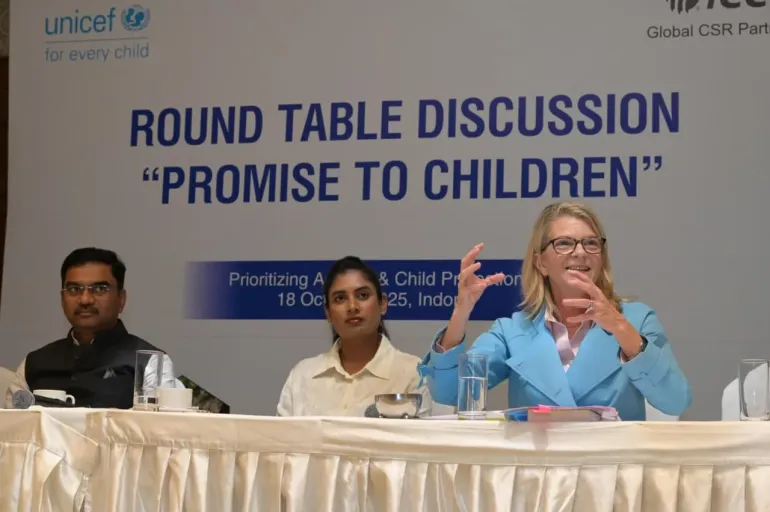
UNICEF Day 2025 highlights India’s growing participation in the global child welfare push as the country expands programs focused on health, education and digital safety for children. The main keyword reflects India’s broader commitment to child rights while aligning national initiatives with international development priorities.
India strengthens child health and nutrition programs
India’s involvement in UNICEF Day 2025 focuses heavily on child health and nutrition, areas that continue to influence long term developmental outcomes. The country has accelerated efforts under national health missions to improve immunisation coverage, strengthen newborn care and reduce preventable illnesses. Expanded use of digital tracking tools has helped frontline workers monitor vaccination cycles more accurately across rural districts. Nutrition programs such as fortified mid day meals and take home rations have been updated to cover emerging gaps in growth indicators. Officials have also noted progress in reducing anaemia among adolescent girls through targeted supplementation drives. These interventions are designed to align with UNICEF’s frameworks that emphasise early life nutrition and equitable access to health services.
Education initiatives show momentum under child welfare goals
Education remains a core pillar of India’s contribution to the global child welfare agenda. As part of UNICEF Day 2025 activities, schools and state education departments are showcasing progress in foundational literacy and blended learning adoption. The national digital learning platforms introduced in recent years have improved access to quality content for remote learners, especially in states where physical infrastructure remains uneven. Surveys indicate rising school retention rates in several regions, supported by community based mentoring programs. India is also scaling inclusive education initiatives for children with disabilities through updated curriculum design and teacher training modules. These efforts align with UNICEF’s emphasis on learning recovery after prolonged disruptions experienced during earlier years of the decade.
Digital safety and online behaviour form new priority areas
Digital safety has emerged as a defining theme during UNICEF Day 2025, with India placing strong focus on safeguarding children’s online experiences. Increased internet penetration among school age children has created new challenges around cyberbullying, exposure to harmful content and data privacy. In response, India has introduced awareness drives in partnership with schools, technology firms and civil society groups to promote safe digital behaviour. Curriculum modules on online etiquette, reporting mechanisms and basic cybersecurity have been integrated into classroom activities in several states. This shift reflects UNICEF’s global call to protect children in digital environments and ensure technology supports learning rather than creating new forms of vulnerability.
Child protection systems expand with community participation
India’s broader child protection mechanisms have strengthened through improved coordination between state agencies, district authorities and community networks. The focus for UNICEF Day 2025 includes highlighting results from child helpline upgrades, enhanced reporting frameworks for abuse cases and expansion of foster care models. Community volunteers and panchayat level committees have been trained to identify risk indicators early, especially in regions with higher instances of child labour or trafficking. Legal support units have increased outreach programs to assist families navigating custody or welfare disputes. These efforts reflect India’s attempt to modernise child protection systems with a preventive and community centred approach.
Climate resilience and disaster preparedness initiatives for children
Climate resilience has become an essential component of India’s child welfare policies. Rising incidence of extreme weather events prompted the development of school safety plans and child centric disaster preparedness modules. UNICEF Day 2025 events feature demonstrations on evacuation drills, early warning dissemination and psychosocial support training for students. Government departments are integrating climate risk assessments into infrastructure planning for schools, anganwadi centres and healthcare facilities. These measures align with UNICEF’s broader push to ensure that climate adaptation strategies address children’s unique vulnerabilities, particularly in flood prone and drought affected regions.
Collaborative programs and India’s global partnerships expand
India has increased participation in collaborative programs with global partners to enhance evidence based child welfare approaches. UNICEF Day 2025 marks renewed cooperation on data systems that track child development indicators more precisely. India’s demographic scale and diversity provide critical insights for global studies on nutrition, education and social protection. International workshops conducted this year focus on improving policy frameworks, enhancing training for field workers and strengthening digital tools used for real time monitoring. These collaborations signal India’s intent to contribute to global best practices while improving national service delivery standards.
Takeaways
India uses UNICEF Day 2025 to highlight gains in health and education
Digital safety emerges as a major priority in child welfare planning
Child protection systems expand through stronger community involvement
Climate resilience programs become integral to national child welfare strategy
FAQ
What is India’s main focus during UNICEF Day 2025
India is highlighting progress in child health, nutrition, education, digital safety and protection systems while contributing to global child welfare discussions.
Why is digital safety included in child welfare initiatives
Digital exposure among children has increased sharply, making it necessary to address risks like cyberbullying, harmful content and data privacy through awareness and curriculum updates.
How is India improving child protection systems
Strengthened helplines, community monitoring networks, legal support units and foster care expansion have enhanced early intervention and case management capabilities.
What role does climate resilience play in child welfare
Climate related risks affect children disproportionately, so India is integrating school safety plans, disaster training and infrastructure resilience into welfare policies.