





Now Reading: Australia plans nationwide social media ban for under 16s
-
01
Australia plans nationwide social media ban for under 16s
Australia plans nationwide social media ban for under 16s
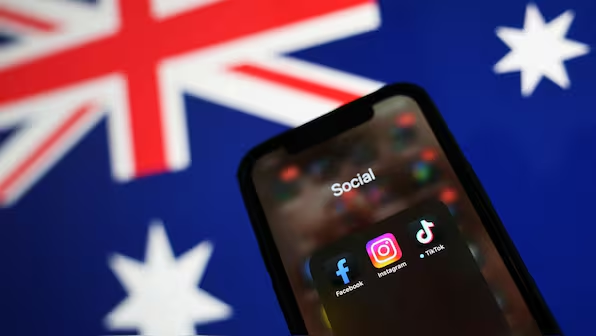
Australia plans a nationwide social media ban for under 16s, signalling a major policy shift aimed at addressing online safety concerns, mental health risks and increasing exposure to harmful digital content. The main keyword reflects a time sensitive development attracting global attention due to its scale and potential implications.
Government pushes age restriction reform amid rising safety concerns
The proposal for a nationwide ban follows years of debate over how social media platforms impact young users. Australian policymakers have cited evidence linking early social media exposure to anxiety, cyberbullying and addictive behaviour among children. The government argues that current age verification systems are inadequate and allow minors unrestricted access. Under the new plan, platforms may be legally required to implement stronger identity checks before account creation. The reform aligns with public sentiment as several parent groups and child psychologists have called for stricter digital boundaries. The proposal enters a consultation stage where lawmakers will evaluate enforcement mechanisms and exceptions, especially for educational platforms.
Technology standards and compliance expectations for platforms
Secondary issues surrounding technology standards are central to the proposed ban. Regulators expect social media companies to develop more accurate and privacy conscious age verification tools. This may include biometric assessment, digital ID integration or third party verification frameworks. Compliance will require platforms to redesign onboarding processes and introduce mechanisms to detect underage users who attempt to bypass restrictions. Penalties for non compliance are likely to include significant fines and mandatory corrective action orders. While several tech companies publicly endorse safer digital ecosystems, industry groups have warned that age verification at scale could raise privacy, cybersecurity and data management challenges. Legislators intend to address these concerns through detailed technical guidelines.
Mental health evidence strengthens case for regulatory intervention
Growing mental health research is influencing the urgency of the ban. Studies from global institutes indicate that excessive social media use among early teenagers is correlated with disrupted sleep patterns, increased peer pressure and depressive symptoms. Australian health experts have noted a rise in clinic referrals involving digital dependency, particularly among users aged 12 to 15. Policymakers emphasise that restricting early exposure can mitigate long term behavioural risks. Examples from international policy debates, such as ongoing discussions in the United States and Europe, provide additional validation for stronger child focused regulation. The Australian proposal aims to reduce risk during formative years when cognitive and emotional development is highly sensitive to external influence.
Schools and parents prepare for implications of a national ban
Schools and parents are evaluating how a nationwide social media ban for under 16s could influence classroom behaviour, homework routines and digital learning patterns. Many schools use controlled digital platforms for assignments, but these tools differ from mainstream social networks. Administrators expect that a ban may reduce distraction and online bullying incidents during school hours. Parent groups are anticipating a positive impact on children’s sleep schedules and outdoor activity levels. However, concerns remain about enforcement at home, as families will need clear guidance on monitoring devices and discussing digital boundaries. The government is preparing advisory material to support parents in managing the transition if the law is enacted.
Legal and ethical debates intensify around enforcement
The proposal has sparked debate around privacy, autonomy and rights of older teenagers who may feel restricted by a blanket ban. Legal scholars are examining whether the policy aligns with constitutional rights and whether exceptions should exist for creative or entrepreneurial uses of social platforms. Opponents argue that an outright ban could push minors toward unregulated platforms or VPN based workarounds, reducing overall safety. Supporters counter that structured restrictions coupled with education campaigns are more effective than relying solely on platform moderation. Lawmakers aim to craft a framework that addresses these concerns without weakening the core safety objective.
Global reaction and potential influence on international policies
Australia’s move may influence global digital safety regulations as countries monitor the outcomes of the proposed ban. International child safety organisations have shown interest in how Australia plans to balance strict enforcement with user privacy. Technology policy analysts note that if the experiment proves effective, similar age restrictions may appear in Europe or parts of Asia. Social media companies headquartered outside Australia will need dedicated compliance strategies for the Australian market, potentially setting new operational precedents. The global conversation around children’s digital safety is expected to intensify as more countries evaluate regulatory models inspired by Australia’s approach.
Takeaways
Australia proposes a nationwide ban on social media for under 16s
Age verification technology and platform compliance remain central challenges
Mental health research strengthens the rationale for regulatory action
Schools and parents prepare for behavioural and practical implications
FAQ
Why is Australia planning a social media ban for under 16s
The proposal aims to address rising mental health concerns, cyberbullying risks and insufficient age verification systems that currently allow minors easy access to social platforms.
How will age restrictions be enforced
Platforms may be required to implement stringent verification tools such as digital IDs or biometric checks, along with penalties for non compliance and efforts to detect underage accounts.
Will the ban affect educational digital platforms
No. The focus is on mainstream social networks. Educational platforms with controlled environments are expected to remain accessible for students.
Could the policy influence global regulations
Yes. Many countries are monitoring the proposal closely, and its implementation may inspire similar restrictions elsewhere if proven effective.