







Now Reading: Parliament Passes VB-G RAM G Bill Replacing MGNREGA Scheme
-
01
Parliament Passes VB-G RAM G Bill Replacing MGNREGA Scheme
Parliament Passes VB-G RAM G Bill Replacing MGNREGA Scheme
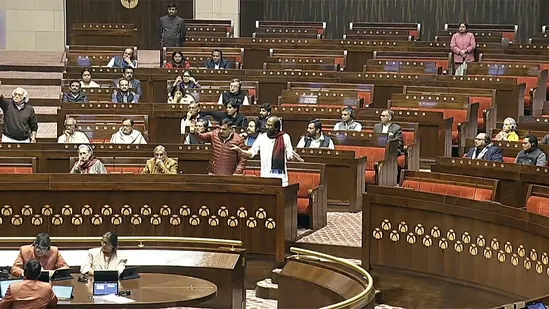
Parliament has passed the VB-G RAM G Bill, formally replacing the MGNREGA scheme with a redesigned rural employment and livelihood framework. The policy reform marks a major shift in how rural wage support, asset creation, and skill-based employment will be delivered across India.
The passage of the VB-G RAM G Bill by Parliament signals one of the most significant rural policy reforms in recent years. The legislation replaces the Mahatma Gandhi National Rural Employment Guarantee Act with a new model focused on guaranteed work, livelihood diversification, and measurable outcomes. The government has positioned the change as a response to evolving rural economic needs and implementation challenges under the earlier scheme.
Parliament clears landmark rural policy reform
The Bill was passed after extended debate in both houses of Parliament of India, with the government emphasising efficiency, transparency, and long-term income generation. Lawmakers supporting the reform argued that rural employment policy must move beyond short-term wage support and focus on sustainable economic activity.
Opposition members raised concerns around transition risks, particularly the protection of existing beneficiaries. In response, the government clarified that no ongoing worker will lose access to employment during the rollout phase, and existing job cards will remain valid until states complete migration to the new framework.
What VB-G RAM G replaces under MGNREGA
MGNREGA guaranteed 100 days of wage employment per rural household, primarily through unskilled manual work. While it provided a safety net, the scheme faced criticism over delayed payments, uneven asset quality, and limited skill development.
The VB-G RAM G framework retains the principle of guaranteed work but expands its scope. It integrates wage employment with rural infrastructure projects, agricultural value chains, and skill-linked activities. The emphasis shifts from short-duration work to projects that generate recurring income or community-level economic benefits.
Key features of the VB-G RAM G framework
Under the new policy, rural employment will be aligned with local economic plans prepared at the block and district level. Projects will prioritise water conservation, agri-logistics, rural housing support, and micro-enterprise infrastructure. Workers may receive a mix of wage payments and skill certifications, depending on the nature of work.
Digital attendance, direct benefit transfers, and time-bound wage payments have been mandated to reduce delays. The Bill also allows limited convergence with private and cooperative sector projects, provided wage and labour safeguards are maintained.
Funding structure and state implementation role
The central government will continue to fund the core wage component, while states are expected to co-finance material costs and skill modules. Performance-linked incentives have been introduced for states that demonstrate timely payments, high asset durability, and improved household income outcomes.
States will retain flexibility to adapt projects to local needs, but national outcome benchmarks will be monitored annually. This marks a shift from input-based monitoring under MGNREGA to output and outcome-based evaluation under VB-G RAM G.
Impact on rural workers and local economies
For rural households, the reform aims to provide more predictable income streams rather than fragmented workdays. By linking employment to productive assets and skills, the government expects improved employability beyond public works.
Local economies may benefit from better-quality infrastructure and stronger rural supply chains. However, experts note that successful implementation will depend heavily on administrative capacity at the grassroots level, especially during the transition period.
Political and economic significance of the reform
Replacing MGNREGA carries strong political and economic implications. The original scheme was a cornerstone of rural welfare for nearly two decades. The government has framed VB-G RAM G as an evolution rather than a withdrawal of support, stressing continuity in employment guarantees.
Economically, the reform aligns with broader goals of reducing long-term fiscal leakage while improving productivity of public spending. The coming financial year will be critical in determining whether the new framework delivers on these objectives.
Takeaways
Parliament has passed VB-G RAM G Bill replacing MGNREGA framework
New policy shifts focus from short-term wages to livelihood creation
States get flexibility but face stricter outcome-based monitoring
Successful rollout depends on payment discipline and local capacity
FAQs
Does VB-G RAM G remove guaranteed rural employment?
No. The scheme retains guaranteed work but changes how employment is structured and linked to outcomes.
What happens to existing MGNREGA workers?
Current workers will be transitioned into the new system, with job cards and pending entitlements protected during rollout.
How is VB-G RAM G different from MGNREGA?
VB-G RAM G combines employment with skill development, infrastructure quality, and income-generating assets.
When will the new scheme be implemented nationwide?
Implementation will begin in phases, with states required to transition within a defined timeframe set by the central government.