









Now Reading: Kerala Assembly Session Opens With New Legislative Focus
-
01
Kerala Assembly Session Opens With New Legislative Focus
Kerala Assembly Session Opens With New Legislative Focus
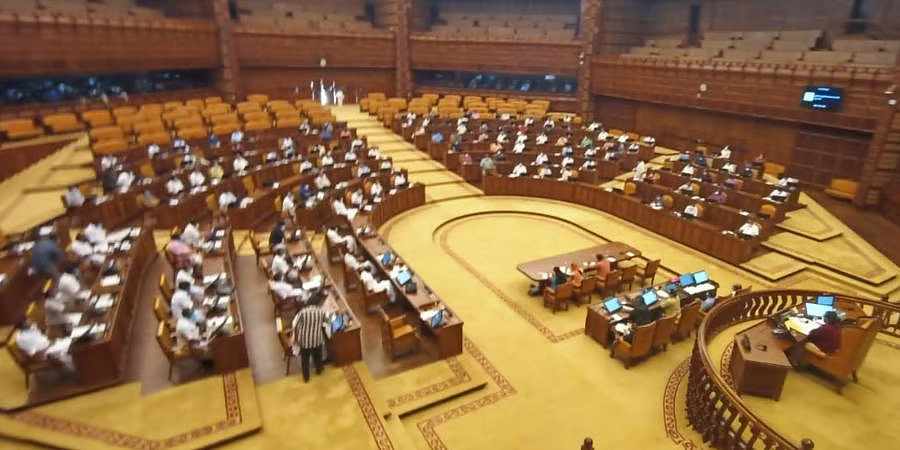
The Kerala Assembly session has opened with a renewed legislative focus, as the state government outlines priorities centered on governance reforms, economic stability, welfare delivery, and pending policy commitments amid a politically charged environment.
The Kerala Assembly session opening is a time sensitive political development that sets the tone for the state’s legislative agenda in the coming months. The session begins against the backdrop of economic pressures, administrative reforms, and growing public scrutiny, making the legislative focus particularly significant for both the ruling front and the opposition.
Opening Day Signals Government Priorities
The opening of the Kerala Assembly session traditionally serves as a signal of the government’s immediate and medium term priorities. This session places emphasis on legislative business rather than symbolic proceedings, with a packed agenda expected over the coming days.
Government benches have indicated that key focus areas include fiscal management, social welfare schemes, infrastructure development, and administrative streamlining. The leadership aims to move forward with bills that have been pending due to earlier disruptions and time constraints. The emphasis appears to be on measurable outcomes rather than broad policy declarations.
Legislative Agenda And Expected Bills
Several important bills and amendments are expected to be introduced or taken up during the session. These include proposals related to local governance, education administration, public service delivery, and financial oversight. Lawmakers are also likely to debate supplementary demands for grants, reflecting evolving fiscal requirements.
The legislative focus is also expected to address regulatory clarity in sectors such as health, cooperative institutions, and public enterprises. With Kerala navigating revenue constraints, discussions around budgetary discipline and resource mobilisation are anticipated to be intense and closely watched.
Opposition Strategy And Key Issues
The opposition has entered the session with a clear strategy to question the government on governance efficiency, economic management, and administrative accountability. Issues such as rising costs of living, unemployment, and the functioning of public sector units are expected to dominate opposition interventions.
Opposition leaders have indicated that they will press for detailed explanations on policy execution rather than announcements. Walkouts, adjournment motions, and calling attention notices remain likely if debates turn confrontational. The effectiveness of the session will depend on whether discussions remain productive or descend into procedural disruptions.
Economic And Fiscal Context Of The Session
The Kerala Assembly session opens amid continued fiscal stress for the state. Revenue growth has faced pressure due to broader economic conditions, while expenditure commitments remain high due to welfare oriented policies.
This context makes legislative scrutiny of financial proposals particularly critical. The government is expected to defend its spending priorities and explain measures taken to manage debt, enhance revenue, and ensure fiscal sustainability. Any legislative decisions taken during this session will have long term implications for the state’s financial health.
Governance Reforms And Administrative Focus
A notable aspect of the new legislative focus is governance reform. The government has signaled intent to improve administrative efficiency, reduce procedural delays, and strengthen accountability mechanisms within departments.
Proposed discussions may include digitisation of services, decentralisation of administrative powers, and reforms aimed at improving transparency in public institutions. Lawmakers are expected to debate how effectively existing reforms have translated into on ground improvements for citizens.
Law And Order And Social Issues
Law and order matters, along with social issues, are also expected to feature prominently. The Assembly may witness debates on crime trends, policing effectiveness, and social welfare outreach to vulnerable groups.
Education and health remain sensitive sectors, particularly with concerns around infrastructure quality and service delivery. Legislators from across parties are likely to raise constituency specific issues, using the session as a platform to seek administrative responses.
Political Significance Of The Session
Politically, the session holds significance as it shapes narratives ahead of future electoral contests. Performance in the Assembly often influences public perception of governance competence and opposition effectiveness.
For the ruling coalition, smooth passage of key bills would signal administrative control and legislative coherence. For the opposition, sustained questioning and issue based debates offer an opportunity to position themselves as credible alternatives.
What To Watch In The Coming Days
Observers will closely monitor attendance, duration of debates, and the number of bills passed. The balance between legislative productivity and political confrontation will determine how the session is ultimately assessed.
Public interest will also focus on whether discussions translate into actionable policy decisions or remain confined to rhetoric. The success of the session will be measured not just by legislative output but by the quality of debate and clarity of policy direction.
Broader Implications For Kerala Governance
The opening of the Assembly session with a clear legislative focus reflects an attempt to recalibrate governance priorities amid evolving challenges. Decisions taken here will shape administrative direction, fiscal planning, and policy execution in the months ahead.
As Kerala continues to balance welfare commitments with economic realities, the legislative process becomes a crucial arena for accountability, consensus building, and reform oriented governance.
Takeaways
Kerala Assembly session has begun with emphasis on legislative productivity
Economic management and governance reforms are central to discussions
Opposition plans to focus on accountability and policy execution
Outcomes of the session will shape governance and political narratives
FAQs
Why is the Kerala Assembly session important?
It sets legislative priorities and allows scrutiny of government policies and spending.
What issues are expected to dominate the session?
Economic management, governance reforms, welfare delivery, and law and order.
Will new bills be introduced?
Yes, several bills and amendments are expected to be tabled or debated.
How does this session affect the public?
Legislative decisions directly influence governance, services, and state policies.