






Now Reading: Iran Closes Airspace, Indian Flights Rerouted Amid Safety Advisories
-
01
Iran Closes Airspace, Indian Flights Rerouted Amid Safety Advisories
Iran Closes Airspace, Indian Flights Rerouted Amid Safety Advisories
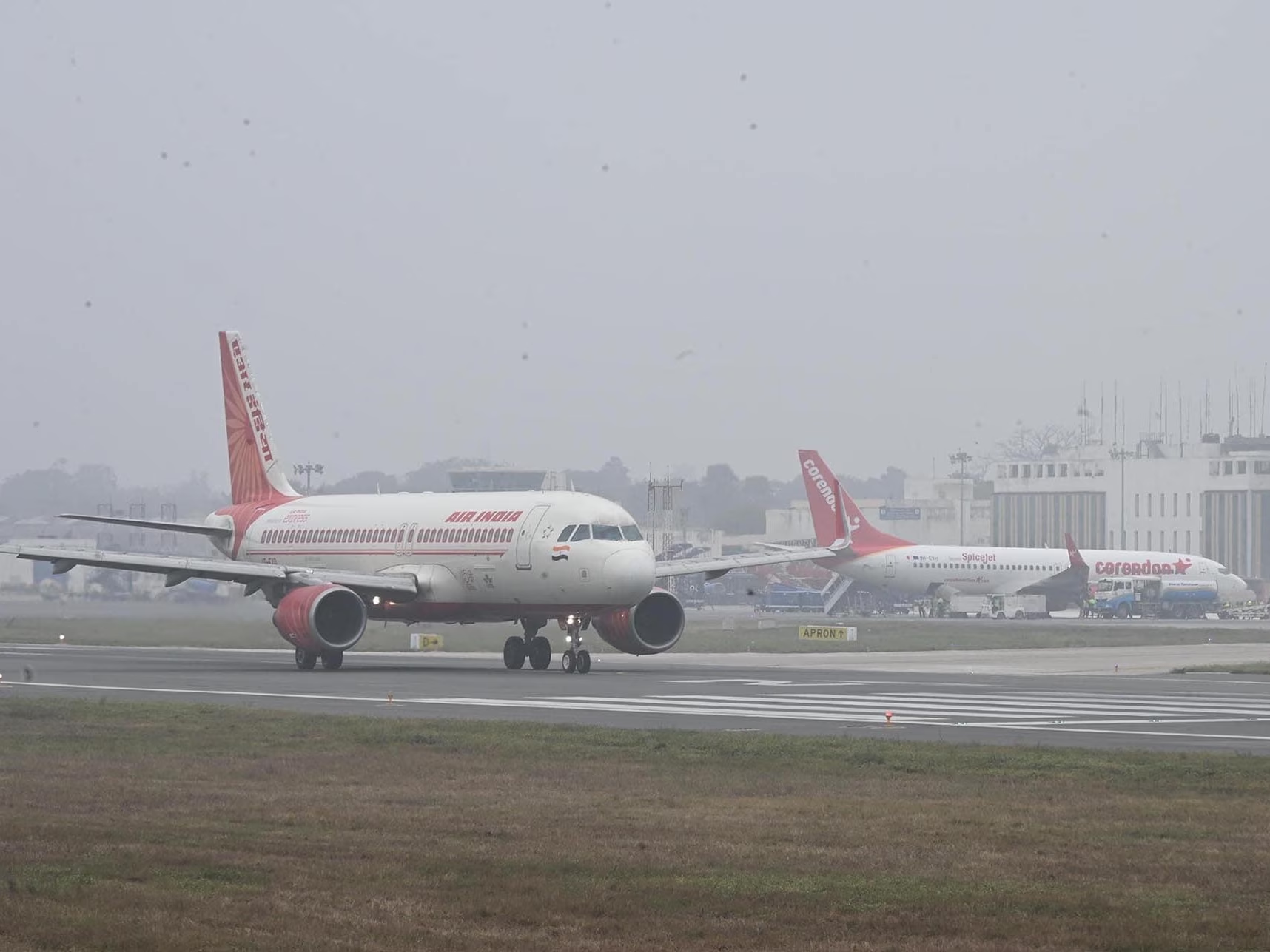
Iran airspace closure has disrupted international aviation routes, forcing Indian airlines to reroute long haul flights to Europe, North America, and parts of West Asia. The move follows heightened security advisories, leading to longer flight durations, higher fuel consumption, and operational adjustments across carriers.
The Iran airspace closure has emerged as a significant travel disruption for Indian airlines operating international sectors. Following regional security advisories, Iranian authorities temporarily restricted civilian aircraft movement through their airspace, prompting airlines to take precautionary rerouting measures. Indian carriers operating westbound flights were among the most affected, as Iran lies along a critical aviation corridor connecting India with Europe, the Middle East, and North America.
Why Iran airspace is crucial for Indian airlines
Iran’s airspace is one of the most strategically important aviation corridors for Indian international flights. It offers a direct and fuel efficient route for westbound services from Indian hubs such as Delhi and Mumbai to destinations in Europe, the United Kingdom, and the eastern coast of North America.
With the Iran airspace closure, airlines have been forced to divert flights southward over the Arabian Peninsula or northward through Central Asia, depending on destination and aircraft type. These diversions add significant distance to flight paths, impacting schedules and operational costs.
For passengers, the changes translate into longer travel times and, in some cases, extended layovers due to crew duty limitations.
Indian airlines implement rerouting and operational changes
Indian airlines responded swiftly to the safety advisories by rerouting affected flights. Carriers adjusted flight plans to avoid Iranian airspace entirely, prioritising passenger and crew safety.
Several flights experienced increased flight durations ranging from 30 minutes to over an hour, depending on destination. Airlines also reviewed fuel planning, as longer routes require higher fuel loads, sometimes impacting payload capacity.
Some flights departing late night from India faced rescheduling to accommodate crew rest norms, while others were operated with technical stops planned as contingencies. Airlines informed passengers through advisories and direct communication, advising them of possible delays.
Impact on passengers and travel schedules
For travellers, the Iran airspace closure has resulted in longer flight times and occasional arrival delays. While cancellations have largely been avoided, passengers on ultra long haul routes have reported extended journey durations.
Transit passengers connecting onward flights in Europe or North America may face tighter connections, though airlines are coordinating to minimise missed connections. Business travellers and those on fixed itineraries are most impacted by schedule changes.
Despite the inconvenience, airlines have emphasised that rerouting is a standard global aviation response during regional security concerns and does not indicate immediate danger to commercial flights.
Safety advisories and regional aviation concerns
The airspace closure follows heightened regional security assessments that prompted precautionary advisories for civilian aviation. Airlines worldwide regularly monitor geopolitical developments, and airspace restrictions are implemented based on risk evaluation rather than active conflict alone.
Aviation authorities issue advisories to ensure aircraft avoid regions where navigation, communication, or missile activity could pose potential threats. Such advisories are common in volatile regions and often lead to temporary airspace restrictions until assessments stabilise.
Indian airlines coordinate closely with international aviation bodies and aircraft manufacturers to ensure compliance with safety protocols during such events.
Financial and operational impact on airlines
From an airline operations perspective, rerouting has direct cost implications. Longer routes increase fuel burn, crew costs, and scheduling complexity. Over time, sustained airspace restrictions can pressure operating margins, especially on competitive international routes.
Fuel accounts for a major portion of airline expenses, and even marginal increases in flight time can significantly impact costs on long haul services. Airlines may also need to revise block times and adjust aircraft rotations to maintain network stability.
However, airlines typically absorb these costs in the short term rather than passing them on to passengers immediately, unless disruptions persist over an extended period.
What travellers should expect in coming days
The duration of the Iran airspace closure will depend on ongoing security assessments and regional stability. Airlines are continuing to monitor developments and will restore original routes once authorities deem it safe.
Passengers planning international travel are advised to expect minor delays and remain flexible with schedules. Checking flight status before departure and allowing buffer time for connections can help manage inconvenience.
While the situation adds complexity to international travel, aviation operations remain stable, and airlines continue to prioritise safety above all other considerations.
Takeaways
- Iran airspace closure has disrupted key international flight routes
- Indian airlines have rerouted flights to ensure passenger safety
- Longer flight times and minor delays are expected
- Airlines are monitoring the situation for route normalisation
FAQs
Why did Iran close its airspace to civilian flights?
The closure followed heightened security advisories, prompting precautionary restrictions to ensure aviation safety.
Are Indian international flights cancelled due to this?
No widespread cancellations have been reported. Most flights are operating on alternate routes with longer durations.
Will ticket prices increase because of rerouting?
Short term fare changes are unlikely, but prolonged disruptions could affect operating costs over time.
How long will the rerouting continue?
Rerouting will remain in place until authorities reopen the airspace after security conditions stabilise.