







Now Reading: Inside the Wood-Carved Homes of Himachal: A Living Tradition, Not Just Architecture
-
01
Inside the Wood-Carved Homes of Himachal: A Living Tradition, Not Just Architecture
Inside the Wood-Carved Homes of Himachal: A Living Tradition, Not Just Architecture
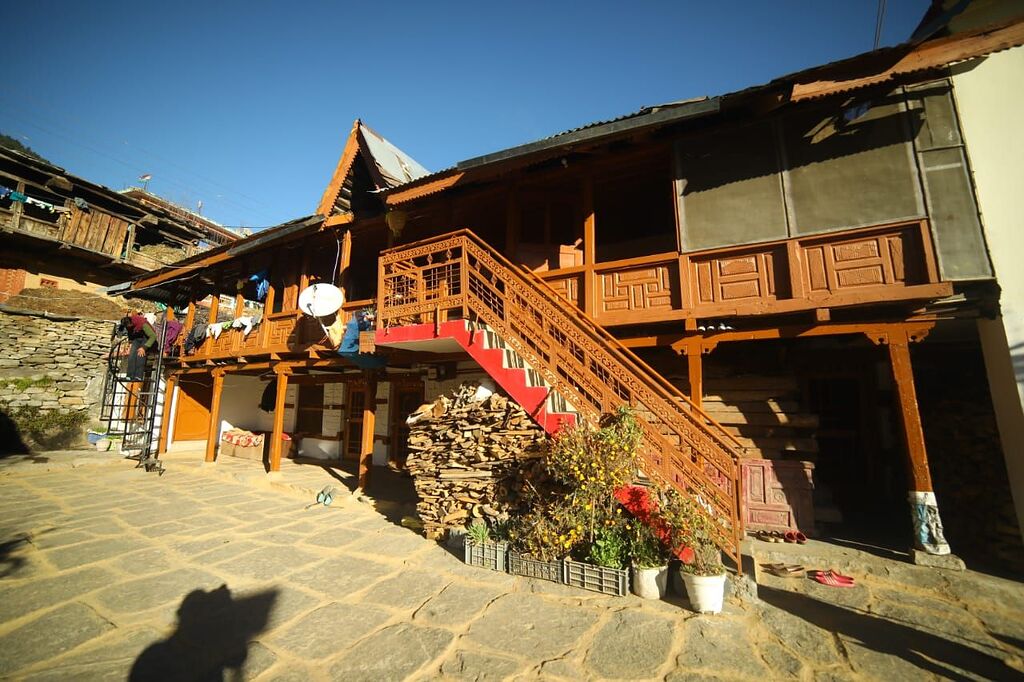
In Himachal Pradesh, tradition isn’t something that sits in museums—it lives in the walls, ceilings, and doors of the homes people still reside in. Across several districts, especially in Kullu, Kinnaur, and Chamba, you’ll find centuries-old wooden houses with intricate carvings, standing tall against the Himalayan backdrop. These homes aren’t just built for shelter—they carry history, craftsmanship, and community values all under one roof.
Woodwork that speaks
The moment you step into a traditional Himachali home, one thing becomes clear: this isn’t mass-produced carpentry. Every beam, panel, and pillar is hand-carved, often passed down through generations of artisans. From floral motifs to religious symbols, the details are precise and symbolic, reflecting local beliefs, folklore, and the natural beauty of the surrounding hills.
These carvings aren’t just aesthetic. They serve a purpose—keeping evil spirits away, attracting blessings, and narrating cultural stories without a single written word.
Why wood, and why still?
Wood has long been the primary building material in Himachal, especially in the higher-altitude regions. It insulates better against the cold, is locally available, and blends naturally with the terrain. Stone is used as well, but the combination of stone and wood—often seen in Kath-Kuni style construction—is what gives these homes their strength and elegance.
Despite modern building materials making their way into these regions, many families still prefer traditional homes. It’s not just nostalgia. These structures have proven resilient against harsh winters, earthquakes, and even heavy snowfall. In places like Rampur and Sarahan, entire villages are built with this architectural style still intact.
Cultural legacy under threat
As cities expand and modern housing becomes more aspirational, this unique architectural heritage is slowly shrinking. Young people moving to urban centres often leave these homes behind. Some are abandoned, others renovated beyond recognition. A few are converted into homestays—but not all with the sensitivity these structures deserve.
In towns like Mandi, Shimla, or Dharamshala—popular among tourists and new residents—there’s growing interest in preserving local architecture. But real preservation is more than just maintaining the outer look. It means protecting the knowledge, skill, and purpose behind it.
What Tier 2 India can take from this
The wood-carved homes of Himachal offer more than visual inspiration. They are examples of sustainable living rooted in local context. Tier 2 cities like Dehradun, Udaipur, or Shillong—facing rapid urbanization—can take cues from these techniques. Whether it’s using local materials, involving native artisans, or designing homes that respond to the climate, there’s practical wisdom here.
These houses also reflect a slower, more intentional way of living. A connection with seasons, respect for craftsmanship, and pride in heritage—things that often get lost in concrete jungles.
Final word
Himachal’s wooden homes are more than just beautiful structures. They are living testaments to how design, culture, and environment can work together. As India continues to build rapidly, it’s worth pausing to see how some of the oldest homes in the hills are still standing—quietly teaching us something modern buildings often forget