




Now Reading: How Real-World Asset Tokenisation Could Redefine Investing for Indian Households
-
01
How Real-World Asset Tokenisation Could Redefine Investing for Indian Households
How Real-World Asset Tokenisation Could Redefine Investing for Indian Households
India’s investment landscape is evolving rapidly. With digital finance reshaping how people save and grow their wealth, a new concept—real-world asset tokenisation—is drawing attention. It promises to make assets like real estate, gold, and art accessible to more investors by converting them into digital tokens. For Indian households used to traditional investments, this could open new doors to diversification and ownership.
Understanding Real-World Asset Tokenisation
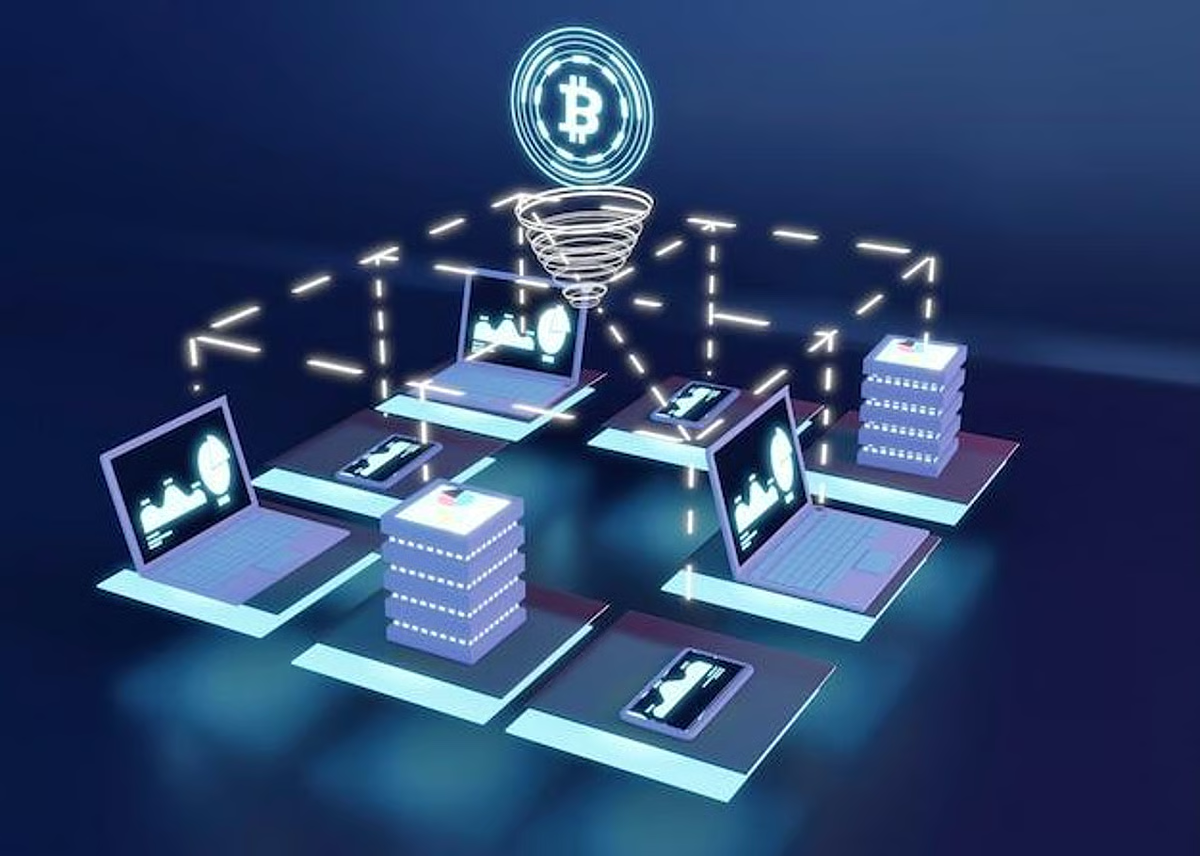
At its core, tokenisation means representing real, tangible assets as digital tokens on a blockchain. Each token represents a fraction of an asset, allowing investors to own a small portion instead of buying the entire thing. This model could apply to property, company shares, luxury goods, or even agricultural produce.
For Indian investors, where high-value assets like real estate are often out of reach, tokenisation could make participation easier and more transparent. For instance, instead of investing ₹50 lakh in a full property, one could own a smaller digital share of it worth just a few thousand rupees.
Why It Matters for Indian Households
Traditionally, Indian families have trusted physical assets—land, gold, and property—as safe investments. However, rising prices, limited liquidity, and paperwork have restricted easy entry. Tokenisation changes that by breaking assets into smaller, tradeable units.
This means even middle-income investors from Tier 2 cities like Nagpur, Indore, or Kochi could access investment opportunities once limited to metro residents or high-net-worth individuals. It could also improve liquidity, allowing investors to sell their tokens faster than physical assets, which often take months to convert into cash.
Bridging the Gap Between Traditional and Digital Finance
One of the biggest strengths of tokenisation is how it connects traditional finance with blockchain technology. Tokens can be stored in digital wallets, traded on regulated platforms, and recorded securely on blockchains. This system reduces manual processes and the need for intermediaries, creating a faster and more transparent investment environment.
For households that are gradually adopting digital payments, mutual funds, and online banking, tokenised assets could be the next logical step. It builds on digital literacy and introduces families to blockchain without demanding deep technical knowledge.
Challenges That Still Exist
Despite its potential, tokenisation in India faces real challenges. Regulatory clarity remains limited. Investors need legal protection to ensure that their token truly represents ownership of a physical asset. Security and fraud risks also exist, especially if unregulated platforms begin offering token-based investments.
Additionally, awareness is still low. Many Indians associate crypto and blockchain with speculation rather than structured investment. Educating investors about how tokenisation works—and how it differs from cryptocurrency trading—will be crucial for adoption.
The Road Ahead
India’s financial ecosystem is becoming more open to innovation, especially with government-backed digital infrastructure and blockchain pilots in various sectors. If regulators develop a clear framework, tokenisation could soon find a place in mainstream finance. Banks, startups, and investment firms are already exploring models that align with Indian legal and economic realities.
In the coming years, tokenised investing may help bridge the wealth gap across cities, offering rural and Tier 2 investors equal access to wealth-building opportunities once reserved for the few.
Conclusion
Real-world asset tokenisation is not just a technological trend—it represents a potential shift in how Indian households view ownership and investment. It could make traditional assets more accessible, transparent, and liquid. Yet, its success will depend on awareness, regulation, and trust. For now, it stands as one of the most promising developments in India’s financial future, offering the average household a small but meaningful share in a larger, digital economy.