





Now Reading: IMD Warns Of Early Heatwave Conditions Across Central India
-
01
IMD Warns Of Early Heatwave Conditions Across Central India
IMD Warns Of Early Heatwave Conditions Across Central India
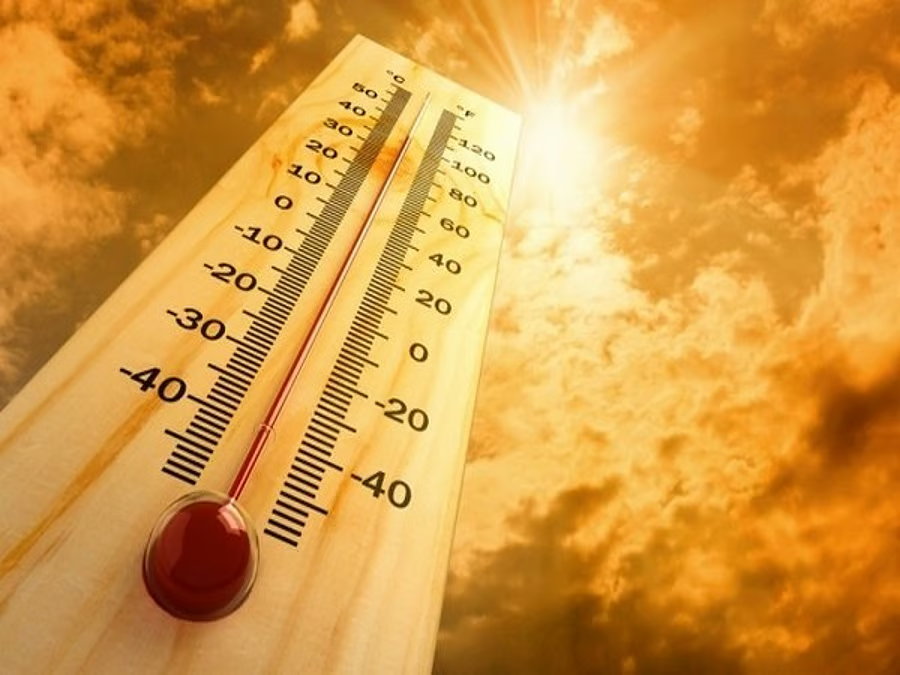
IMD has warned of early heatwave conditions across central India, signalling above normal temperatures weeks ahead of the usual seasonal pattern. The alert raises concerns for public health, water availability, agriculture planning, and urban heat stress as summer arrives sooner than expected.
The India Meteorological Department warning on early heatwave conditions places central India under close observation as maximum temperatures begin climbing faster than climatological averages. Regions including parts of Maharashtra, Madhya Pradesh, Chhattisgarh, and adjoining areas are expected to experience prolonged spells of heat earlier than normal.
IMD Assessment Points To Rising Pre Summer Temperatures
According to IMD assessments, the transition from winter to summer has been unusually sharp this year. Daytime temperatures in several central Indian districts have already crossed long term averages for late January and early February. The absence of sustained western disturbance activity and lower cloud cover have contributed to faster surface heating.
Meteorological data shows soil moisture levels are also below normal in many interior regions, allowing land surfaces to heat rapidly during daytime. This combination increases the probability of heatwave conditions developing earlier than the typical March or April window.
What Qualifies As A Heatwave In Central India
IMD defines a heatwave based on deviation from normal maximum temperatures and absolute thresholds. For central India, heatwave conditions are declared when maximum temperatures reach or exceed 40 degrees Celsius and are at least 4.5 degrees above normal. Severe heatwave classification applies when deviations cross 6.5 degrees.
Early onset does not necessarily mean immediate extreme temperatures but indicates a longer duration of above normal heat. Prolonged exposure even at slightly lower thresholds can increase health risks, especially for elderly populations, outdoor workers, and children.
Impact On Agriculture And Rabi Crops
Early heatwave conditions can affect rabi crops that are still in grain filling or maturation stages. Wheat, pulses, and oilseeds are particularly sensitive to sudden temperature spikes during February. Heat stress during this phase can reduce grain weight and overall yield.
Agricultural advisories are likely to focus on irrigation scheduling, mulching, and timely harvesting to minimise losses. Farmers may also be advised to monitor crop moisture closely and avoid midday field activities during high temperature periods.
Urban Heat Stress And Public Health Concerns
Cities across central India face compounded risks due to urban heat island effects. Dense construction, reduced green cover, and heat retaining surfaces can push local temperatures higher than surrounding rural areas. Early heatwaves strain electricity demand as cooling usage rises sooner than expected.
Health departments typically coordinate with IMD alerts to issue heat action advisories. Dehydration, heat exhaustion, and heat stroke cases tend to rise during extended warm spells. Early warnings allow local administrations to activate cooling shelters, ensure water availability, and adjust school and work schedules if needed.
Water Resources And Power Demand Implications
Reservoir levels in central India remain uneven following variable monsoon performance in recent seasons. Early heat accelerates evaporation losses from surface water bodies and increases domestic and agricultural demand. Urban water supply systems may face pressure earlier in the year.
Power utilities also track temperature trends closely. Higher temperatures drive increased air conditioning and cooling appliance usage, leading to peak demand shifts. Early preparedness is essential to prevent outages during prolonged heat spells.
How IMD Alerts Help State Preparedness
IMD heatwave warnings are part of an impact based forecasting system designed to support early action. States use these advisories to activate heat action plans, coordinate health services, and issue public advisories through local administrations.
The early warning allows district authorities to plan staggered work hours for outdoor labour, increase drinking water access points, and disseminate safety information through local channels. Preparedness becomes more effective when warnings arrive weeks in advance rather than during peak summer.
Outlook For The Coming Weeks
Meteorologists indicate that while short term fluctuations are possible, the overall temperature trend across central India is likely to remain above normal. Occasional weather systems may provide brief relief, but sustained cooling is unlikely before the full onset of summer.
IMD will continue issuing region specific advisories as conditions evolve. Residents and authorities are advised to track local forecasts closely and adapt daily routines to reduce heat exposure.
Takeaways
- IMD has warned of early heatwave conditions developing across central India.
- Faster than normal temperature rise is linked to dry conditions and reduced cloud cover.
- Early heat poses risks to agriculture, water availability, and public health.
- Advance warnings allow states to activate heat action and mitigation plans early.
FAQs
Which regions are likely to be affected by early heatwave conditions?
Parts of Maharashtra, Madhya Pradesh, Chhattisgarh, and adjoining central Indian regions are under watch.
Does early heatwave mean extreme temperatures immediately?
Not necessarily. It indicates an earlier and longer period of above normal heat, which can still have serious impacts.
How can people reduce heat related risks?
Staying hydrated, avoiding outdoor activity during peak afternoon hours, and following local advisories can reduce risk.
Will IMD issue further alerts?
Yes, IMD will continue issuing updated forecasts and heat advisories as conditions evolve.