








Now Reading: India finalises 7,995 crore defence support deal with US for Navy copter upgrades
-
01
India finalises 7,995 crore defence support deal with US for Navy copter upgrades
India finalises 7,995 crore defence support deal with US for Navy copter upgrades
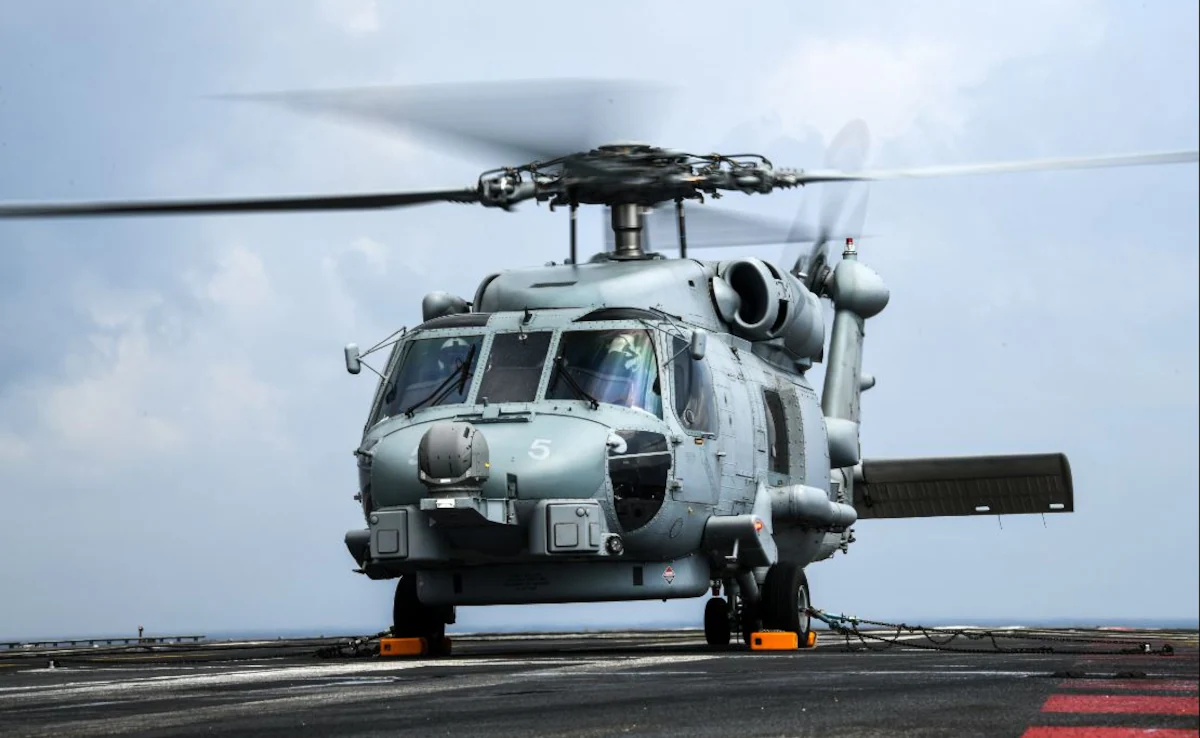
India has sealed a 7,995 crore support deal with the United States to overhaul and modernise its Navy helicopter fleet. The agreement covers long term maintenance, advanced systems upgrades and training support, aimed at boosting the combat readiness of Indian naval aviation.
The 7,995 crore navy copter support deal marks a significant reinforcement of India’s maritime capabilities at a time when the Navy is expanding surveillance and anti submarine warfare operations across the Indian Ocean. The agreement focuses on lifecycle support for existing multi role helicopters, enabling faster turnaround, higher mission availability and stronger operational reliability.
Major upgrade plan for naval helicopters
The first part of the upgrade plan targets critical secondary keyword fleet modernisation needs for the Navy’s multi role helicopters, including those used for surveillance, ship protection and submarine tracking. The contract ensures access to upgraded avionics, mission systems and spare parts pipelines that reduce downtime during high tempo operations. The support package also includes planned overhauls for engines and transmission systems so that current helicopters can operate safely for extended years without compromising performance.
This deal aligns with the Navy’s multi year strategy to modernise aviation assets rather than rely solely on new purchases. With long procurement cycles for fresh platforms, sustaining and upgrading the existing fleet is essential to maintain maritime presence across choke points, island territories and coastal zones. The agreement therefore helps bridge a capability gap while new helicopters such as MH 60R units continue to be inducted in phases.
Why long term support is crucial for naval aviation
A key part of the deal is technical and logistics assistance, a secondary keyword sustainment support element that ensures predictability in fleet management. Naval helicopters operate in harsh maritime conditions that cause faster corrosion and wear. Without structured support, maintenance cycles become unpredictable, impacting mission readiness.
The long term contract guarantees timely supply of critical components, access to specialised repair facilities and on ground support teams who can conduct complex maintenance without shipping systems abroad each time. This significantly cuts repair time and maintains higher availability during peak operational periods, especially in monsoon months when maritime surveillance demands rise.
India’s growing maritime responsibilities, including expanded anti piracy patrols, humanitarian missions and cooperation exercises with partner navies, require helicopters to be mission ready without extensive downtime. Structured sustainment improves planning, reduces cost of emergency imports and helps maintain consistent operational tempo.
Strengthening Indo US defence cooperation
The agreement also adds momentum to the broader defence partnership between India and the United States. The secondary keyword strategic partnership context underpinning the deal reflects deeper cooperation in maritime security, technology sharing and joint operations. Over the last decade, defence support agreements have expanded beyond hardware sales to include technical collaboration, training exchanges and multiyear sustainment commitments.
For India, such agreements ensure long term reliability for imported systems while reducing dependence on ad hoc contracts. For the US, it deepens operational alignment with India in the Indo Pacific at a time when maritime routes face increasing strategic competition. Naval helicopters often operate during joint exercises and regional security missions, making shared systems and maintenance standards valuable for interoperability.
The deal also signals that India continues to prioritise maritime capability building, balancing indigenous development with selective external partnerships. While domestic programs such as the Naval Utility Helicopter remain under development, external support remains critical for high end multirole platforms already in service.
Operational gains expected for the Navy
The Navy expects multiple operational benefits once the support package is fully implemented. Secondary keyword mission readiness improvements will be central, with more helicopters available for deployment at any given time. This increases the Navy’s ability to conduct layered surveillance from aircraft carriers, destroyers and offshore patrol vessels.
Better reliability of onboard sensors enhances the detection range for submarines, surface vessels and potential threats around strategic points such as the Arabian Sea transit routes, the Bay of Bengal approaches and island territories. In addition, upgraded communication systems improve coordination with warships, maritime patrol aircraft and ground control stations, creating a more integrated naval aviation ecosystem.
The support agreement also includes specialised training for maintenance crews and aircrews. These modules help technicians handle sophisticated systems locally, reducing external dependency and improving speed of repairs. For young officers and technical teams, exposure to high end maintenance protocols strengthens future indigenous capability development as well.
Takeaways
The 7,995 crore India US support deal boosts long term operational reliability of Navy helicopters.
Upgrades include avionics, mission systems, engine overhauls and structured spare parts support.
Sustainment planning ensures faster turnaround, reduced downtime and higher mission readiness.
The agreement strengthens Indo US maritime cooperation and supports the Navy’s broader modernisation drive.
FAQ
What does the 7,995 crore support deal cover?
It covers long term maintenance, avionics upgrades, mission equipment support, engine overhauls, spare parts supply and training assistance for the Navy’s multirole helicopter fleet.
Why is this support package important now?
The Navy is expanding its maritime operations and needs predictable maintenance cycles to ensure high helicopter availability while new platforms are still being inducted.
Does this deal involve purchase of new helicopters?
No. It focuses on sustaining and upgrading the current fleet rather than buying new units. It ensures the existing helicopters remain effective for extended operational life.
How does this deal impact Indo US defence ties?
It deepens collaboration in maritime security, enhances technical cooperation and reinforces long term defence support commitments between both countries.