







Now Reading: India Prepares for 2026 With New Policy Roadmaps Across Ministries
-
01
India Prepares for 2026 With New Policy Roadmaps Across Ministries
India Prepares for 2026 With New Policy Roadmaps Across Ministries

India prepares for 2026 with new policy roadmaps across ministries as the Union government shifts from year-end reviews to forward planning. The coordinated push covers economic growth, welfare delivery, infrastructure execution, digital governance, and climate resilience, with ministries aligning targets to medium-term national priorities.
The closing weeks of 2025 have seen ministries move beyond routine annual assessments to outline policy roadmaps for 2026. These roadmaps are not isolated documents. They are interlinked planning tools meant to synchronise budgets, legislation, and execution timelines. Senior officials have indicated that the focus is on continuity of reforms while correcting implementation gaps identified over the past two years.
Economic planning focuses on stability and growth balance
Economic policy planning for 2026 is being shaped around fiscal discipline and growth protection. Ministries handling finance, commerce, and industry are recalibrating targets after a year marked by global volatility and uneven domestic demand. The emphasis is on maintaining macroeconomic stability while sustaining public capital expenditure.
Infrastructure-led growth remains central. Road, rail, port, and logistics ministries are expected to prioritise completion of ongoing projects rather than announcing large volumes of new schemes. This approach reflects lessons from earlier years where delayed execution diluted economic impact. Export competitiveness, especially for manufacturing and services, is also being folded into the 2026 economic roadmap through trade facilitation and compliance simplification.
Welfare delivery roadmaps stress last-mile efficiency
Social sector ministries are preparing 2026 roadmaps with a sharper focus on delivery efficiency. Rather than expanding beneficiary lists aggressively, the emphasis is on reducing exclusion errors and improving service quality. Ministries overseeing food security, rural employment, housing, and health are aligning schemes with updated population and migration data.
Technology-enabled monitoring is becoming a core element. Digital dashboards, beneficiary authentication, and real-time grievance tracking are being embedded into welfare programmes. Officials involved in planning say this shift is aimed at ensuring fiscal resources translate into measurable outcomes on the ground, particularly in rural and semi-urban regions.
Infrastructure ministries align timelines for execution clarity
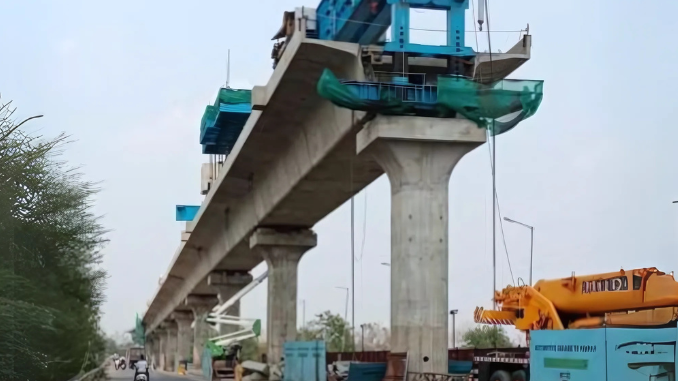
Infrastructure policy roadmaps for 2026 are being designed around execution discipline. Ministries responsible for highways, railways, urban development, and energy are aligning project timelines with funding availability and state-level capacity. The focus is on resolving land acquisition delays, environmental clearances, and contractor performance issues early in the project cycle.
Urban infrastructure is expected to receive targeted attention. Transport integration, water management, and waste processing are being prioritised in fast-growing cities. The aim is to prevent urban stress from undermining economic productivity and quality of life as population concentration increases.
Digital governance and technology reforms gain momentum
Digital governance features prominently in the 2026 planning exercise. Ministries are updating roadmaps to expand interoperable platforms across departments. The goal is to reduce duplication, improve data sharing, and speed up citizen services. Unified digital interfaces for approvals, compliance, and benefits are expected to expand.
Technology policy also extends to cybersecurity, data protection, and emerging technologies. Ministries are reviewing frameworks to ensure that innovation keeps pace with regulation. This balance is critical as digital adoption deepens across banking, healthcare, education, and public administration.
Climate and energy policy integrate long-term commitments
Climate action and energy transition form a distinct pillar of the 2026 roadmaps. Ministries dealing with power, renewable energy, environment, and transport are aligning policies with long-term emissions commitments. Short-term planning focuses on grid stability, storage capacity, and scaling renewable installations without disrupting supply.
Energy efficiency, electric mobility, and cleaner industrial processes are being integrated into sector-specific plans. Officials involved in drafting these roadmaps indicate that climate goals are no longer treated as standalone objectives but embedded within economic and infrastructure strategies.
Coordination across ministries becomes the defining factor
A key feature of India’s 2026 policy preparation is cross-ministerial coordination. Central agencies are working to ensure that targets set by one ministry do not create bottlenecks for another. Shared performance indicators and joint review mechanisms are being used to track progress.
This approach reflects recognition that policy success depends less on announcements and more on alignment. The roadmaps aim to provide predictability to states, investors, and citizens by clearly signalling priorities for the year ahead.
Takeaways
- India’s 2026 policy roadmaps focus on execution, not just announcements
- Economic planning balances fiscal discipline with infrastructure-led growth
- Welfare reforms prioritise delivery efficiency and technology integration
- Climate and digital governance are embedded across sectoral policies
FAQs
What are policy roadmaps in the government context?
Policy roadmaps outline planned reforms, targets, and implementation timelines that guide ministry actions over a defined period.
Why is 2026 planning starting before the new year?
Early planning helps align budgets, legislation, and execution schedules, reducing delays once the financial year begins.
Which sectors are most impacted by the 2026 roadmaps?
Economic policy, infrastructure, welfare delivery, digital governance, and energy transition are the primary focus areas.
How do these roadmaps affect states and citizens?
They provide clarity on government priorities, enabling states to align programmes and citizens to anticipate policy changes.