





Now Reading: Indian Railways Plans Timetable Revamp For Faster Long-Distance Trains
-
01
Indian Railways Plans Timetable Revamp For Faster Long-Distance Trains
Indian Railways Plans Timetable Revamp For Faster Long-Distance Trains

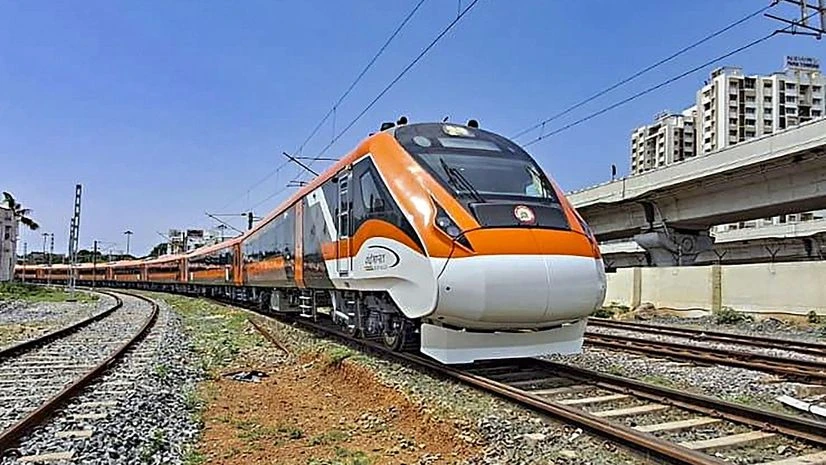
Indian Railways plans timetable revamp for faster long-distance trains as part of a broader effort to improve punctuality, reduce journey times, and optimise network capacity. The proposed changes aim to make intercity and cross-country travel more predictable for passengers.
This is time sensitive news linked to operational planning and upcoming schedule adjustments. With passenger demand rising and premium trains setting new benchmarks, the timetable revamp signals a shift towards performance-driven rail operations.
Why Indian Railways Is Reviewing Train Timetables
Indian Railways has been operating with legacy timetables that were built around older rolling stock capabilities and conservative speed assumptions. Over time, track upgrades, electrification, and modern signalling have improved average speeds, but schedules have not always kept pace.
This mismatch leads to inefficient use of network capacity. Trains often reach stations ahead of schedule only to wait for crossings or platform availability. In other cases, unrealistic buffers lead to cascading delays.
The timetable revamp is intended to align scheduled timings with actual running potential, allowing faster end-to-end journeys without compromising safety.
Focus On Long-Distance And High-Density Routes
The revamp is expected to prioritise long-distance trains operating on high-density corridors. These routes account for a significant share of passenger traffic and are most sensitive to delays.
By rationalising halts, adjusting departure slots, and improving sequencing between fast and slow services, Indian Railways aims to reduce congestion on busy sections. Faster trains will be given clearer paths, while slower services may see revised timings to minimise interference.
This approach is designed to improve overall network fluidity rather than benefiting a limited set of premium trains alone.
Role Of Infrastructure Upgrades And Technology
Recent infrastructure investments form the backbone of the timetable revamp. Track doubling, electrification, and better signalling systems have increased permissible speeds on many sections.
Advanced traffic management systems allow real-time monitoring and dynamic decision-making, enabling tighter scheduling with higher reliability. Modern locomotives and upgraded coaches also support sustained higher speeds with lower maintenance downtime.
These improvements give planners the confidence to compress schedules without increasing operational risk.
Impact On Passenger Experience
For passengers, the most visible impact will be reduced journey times on select long-distance routes. Even savings of 30 to 60 minutes can significantly improve travel convenience on overnight and intercity journeys.
Improved punctuality is another expected benefit. Realistic schedules with optimised buffers reduce the likelihood of chronic delays, making arrival times more dependable.
Clearer timetables also help passengers plan connections and onward travel with greater confidence, particularly on routes with high interchange traffic.
Freight And Mixed Traffic Considerations
Indian Railways operates a mixed traffic network where passenger and freight trains share the same tracks. Any timetable revamp must balance passenger speed gains with freight movement requirements.
Freight corridors and time windows are being factored into the planning process to avoid bottlenecks. On sections where dedicated freight corridors are operational, passenger trains can be scheduled more aggressively without affecting cargo movement.
This separation of traffic types is critical to unlocking higher speeds for long-distance passenger services.
Operational Challenges And Execution Risks
Reworking timetables at a national scale is complex. Even minor changes can ripple across zones, affecting crew schedules, rake availability, and maintenance planning.
Staff training and coordination between zones will be essential to ensure smooth implementation. Any gaps in communication or preparedness could temporarily disrupt services during the transition phase.
Indian Railways has experience with phased rollouts, and a similar approach is expected to minimise passenger inconvenience while testing revised schedules.
Alignment With Broader Rail Modernisation Goals
The timetable revamp aligns with the larger modernisation agenda being pursued by Indian Railways. Faster, more reliable long-distance trains support goals related to modal shift, energy efficiency, and passenger satisfaction.
Railways remain the backbone of long-distance travel for millions of Indians. Improving speed and predictability strengthens rail’s competitiveness against road and air transport, especially for mid-range distances.
The initiative also complements investments in semi-high-speed and premium services by raising baseline performance across the network.
What Passengers Should Expect Next
Passengers are unlikely to see abrupt changes overnight. Revised timetables are typically introduced in phases, with advance notification and updated schedules across booking platforms.
Some trains may see revised departure times, altered halt durations, or adjusted arrival timings. While initial adjustments may require adaptation, the long-term objective is smoother and faster journeys.
As implementation progresses, feedback from passengers and on-ground performance data will guide further refinements.
Long-Term Implications For Rail Travel
If executed effectively, the timetable revamp could redefine expectations from long-distance train travel in India. Faster journeys without new track construction represent a high-impact efficiency gain.
Over time, consistent improvements in speed and punctuality can rebuild trust among passengers who have shifted to other modes due to reliability concerns.
The success of this initiative will depend on disciplined execution, continuous monitoring, and willingness to fine-tune schedules based on real-world outcomes.
Takeaways
- Indian Railways is revising timetables to speed up long-distance trains
- The focus is on realistic scheduling and better network utilisation
- Passengers can expect reduced journey times and improved punctuality
- Phased implementation will minimise disruption during rollout
FAQs
Why is Indian Railways changing train timetables now?
Because infrastructure and technology upgrades allow faster and more reliable operations than current schedules reflect.
Will all long-distance trains become faster?
Not all, but many routes are expected to see time savings through optimised scheduling.
Will departure times change for passengers?
Some trains may have revised timings, which will be communicated in advance.
Does this affect freight train movement?
Freight requirements are being factored in to maintain balance on shared routes.