









Now Reading: Major banking deal boosts India-UAE financial ties with UAE’s Emirates NBD acquiring 60% stake in Indian lender
-
01
Major banking deal boosts India-UAE financial ties with UAE’s Emirates NBD acquiring 60% stake in Indian lender
Major banking deal boosts India-UAE financial ties with UAE’s Emirates NBD acquiring 60% stake in Indian lender
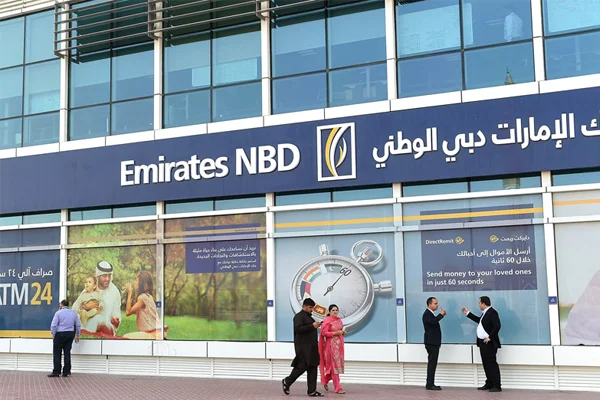
The main keyword “Emirates NBD stake Indian lender” reflects the news nature of the story. This is a headline event—time sensitive – and helps the article adopt a news reporting style.
Short summary
Dubai-based Emirates NBD has agreed to acquire a 60 % stake in India’s RBL Bank for approximately US$ 3 billion via a preferential share issue, marking a landmark foreign investment in India’s banking sector and highlighting deeper India–UAE economic integration.
Deal structure and scale
Emirates NBD will invest about US$ 3 billion (roughly ₹26,850 crore) to pick up up to 60 % equity in RBL Bank via a preferential allotment of new shares. In parallel, the Dubai lender plans a mandatory open offer for up to another 26 % from public shareholders in line with Indian takeover rules. This deal is subject to regulatory approvals from Reserve Bank of India (RBI), Securities and Exchange Board of India (SEBI), and other Indian and UAE regulators. The announced investment represents the largest foreign direct investment in India’s financial-services sector to date.
Strategic rationale for both parties
For Emirates NBD it is an accelerated way to enter India’s rapidly growing banking market. The bank currently operates a small number of branches in India but acquiring a 560-plus branch network of RBL Bank unlocks scale almost instantly. For RBL Bank, the capital infusion strengthens its balance sheet, improves Tier-1 capital ratios, and gives access to global expertise, governance and a stronger promoter base.The deal also aligns with the broader India-Middle East trade and investment corridor ambitions, reinforcing financial and economic linkages between the two countries.
Regulatory and governance implications
The deal pushes the envelope on foreign ownership norms in Indian private banks. India allows up to 74 % foreign investment in private banks, but a single foreign entity’s stake is usually capped unless special regulatory clearance is granted. Emirates NBD will become RBL’s promoter shareholder and gain board-naming rights, subject to regulatory sanction. Post transaction, RBL Bank will retain 25 % minimum public shareholding as per Indian rules. Governance structures will include independent directors and joint oversight to ensure continuity of compliance and risk controls.
Market reaction and sectoral ripple-effects
The stock of RBL Bank surged to a five-year high after the deal announcement, reflecting investor optimism about the new capital, growth prospects and global strategic backing. Analysts view this as a potential trigger for more global banks to target Indian private banks and for Indian banks to seek strategic foreign partners. The deal also signals to regulators that India is open to large foreign strategic investments in the banking sector, if they bring capital, governance and long-term growth. This could shape future policy on foreign participation and capital funding in Indian banking.
What it means for stakeholders
For customers of RBL Bank this could mean faster branch expansion, improved digital services, and exposure to cross-border products especially between India and the Middle East. For Indian banking sector it raises the bar for capital strength, competition and consolidation. For regulators it presents both opportunity (capital inflow, stronger banks) and risk (foreign control, systemic implications). For Emirates NBD it opens a massive opportunity to scale retail and corporate banking in one of the world’s fastest-growing markets, leveraging its global resources and network.
Takeaways
- Emirates NBD’s acquisition of a 60 % stake in RBL Bank is India’s largest foreign direct investment in banking to date.
- The deal allows Emirates NBD to instantly scale in India, and gives RBL Bank fresh capital, governance and global support.
- The transaction pushes boundaries of foreign ownership in Indian private banks and may influence future regulatory norms.
- Market and industry players expect ripple effects: more global strategic capital inflows, increased consolidation and upgraded banking capabilities.
FAQ
Q1: Why is Emirates NBD investing in RBL Bank now?
Because India’s retail and corporate banking market is growing rapidly, and acquiring an established mid-sized bank offers a faster scaling option than green-field branch build-out.
Q2: What are the regulatory hurdles for this deal?
Approvals are needed from the RBI, SEBI, and sometimes the CCI and DPIIT. Foreign ownership caps and promoter status rules must also be complied with.
Q3: How will this impact existing RBL Bank shareholders?
Existing shareholders will see capital infusion, possible changes in governance and strategy, plus an open offer at ₹280 per share for public shareholders giving an exit opportunity.
Q4: What does this mean for the wider Indian banking sector?
It signals increased global strategic interest in Indian banks, may accelerate consolidation, raise competitive standards, and possibly prompt regulatory reconsideration of ownership norms.