





Now Reading: PM Modi Questions Congress Over 1937 Decision to Drop Key Verses from ‘Vande Mataram’
-
01
PM Modi Questions Congress Over 1937 Decision to Drop Key Verses from ‘Vande Mataram’
PM Modi Questions Congress Over 1937 Decision to Drop Key Verses from ‘Vande Mataram’
Introduction:
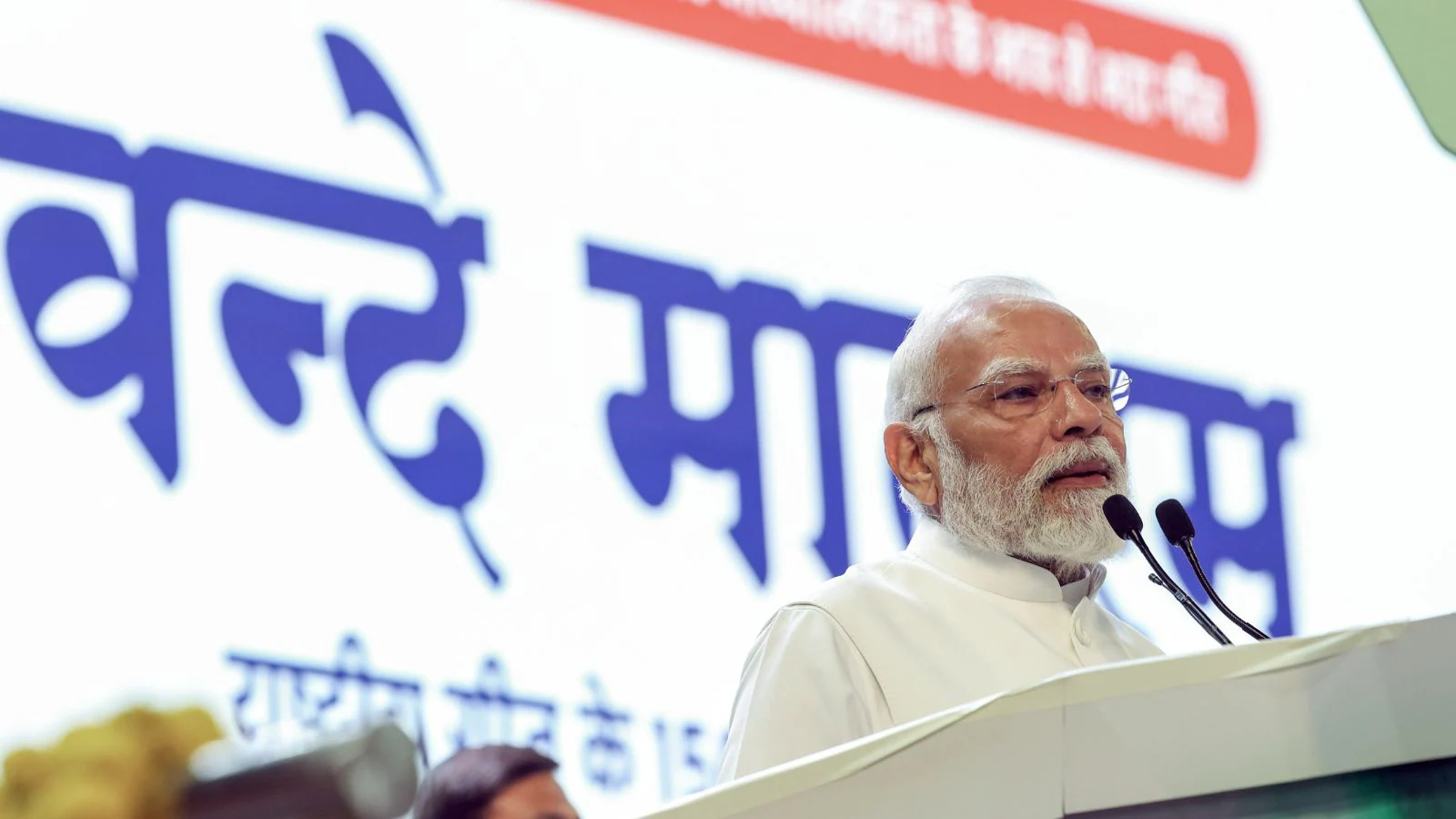
Prime Minister Narendra Modi has reignited a historical debate by pointing to the Congress party’s 1937 decision to drop certain verses of ‘Vande Mataram’. Speaking at a recent event, he questioned the rationale behind the move, calling it an example of selective nationalism. The remark has sparked political exchanges and renewed public curiosity about the song’s history and its role in India’s freedom movement.
The Historical Context of ‘Vande Mataram’:
‘Vande Mataram’, written by Bankim Chandra Chatterjee in 1870s Bengal, became one of the most powerful symbols of India’s struggle for independence. The song was originally composed with six stanzas, combining themes of devotion to the motherland with spiritual imagery. However, in 1937, the Indian National Congress adopted only the first two stanzas for official use, citing concerns that the later verses, which referenced Hindu deities, might not align with the party’s secular framework.
PM Modi’s Remarks and Their Implications:
During his address, Prime Minister Modi questioned why the Congress had chosen to omit the full version of the song despite its patriotic essence. He stated that the decision reflected a compromise that diluted national sentiment to appease certain political sections. His comments come amid a broader effort to revive national symbols that represent unity and pride across communities.
The Prime Minister’s remarks have been interpreted by analysts as both a historical critique and a political message ahead of upcoming state elections, where cultural identity and nationalism remain central themes.
Congress’s Response and Political Reactions:
Leaders from the Congress party have responded by defending the 1937 decision, emphasizing that it was taken after careful consideration to maintain inclusivity during the independence movement. They argue that the partial adoption was not an act of rejection but a step to ensure that all communities could relate to the song equally.
Other opposition parties have accused the ruling BJP of attempting to polarize public opinion using historical symbolism. They contend that such issues are being revived to divert focus from contemporary governance concerns like unemployment and inflation.
Public and Cultural Perspective:
Among citizens, especially younger audiences in Tier 1 and Tier 2 cities, the discussion has sparked renewed interest in India’s cultural history. Many see the debate as an opportunity to revisit school textbooks and understand how patriotic symbols like ‘Vande Mataram’ evolved over time. Some cultural scholars suggest that rather than viewing the song through a political lens, it should be appreciated for its literary and emotional depth.
The Broader Message:
The renewed conversation around ‘Vande Mataram’ reflects how deeply national identity is tied to historical memory in India. While political parties debate over interpretation, the song continues to hold a timeless place in the country’s collective consciousness. It remains a symbol of unity, reminding Indians that the spirit of freedom transcends political boundaries and religious divisions.
Conclusion:
The controversy over ‘Vande Mataram’ shows that even decades after independence, India’s historical choices continue to shape its modern political discourse. Whether viewed as a question of inclusivity or national pride, the song’s enduring resonance reminds the nation of its shared roots. As the discussion continues, one thing is clear — ‘Vande Mataram’ remains more than just a song; it’s a thread that binds generations through patriotism and cultural identity.