






Now Reading: Political Debate Rekindled: BJP Revives Old Controversy Over Nehru and ‘Vande Mataram’ Stanzas
-
01
Political Debate Rekindled: BJP Revives Old Controversy Over Nehru and ‘Vande Mataram’ Stanzas
Political Debate Rekindled: BJP Revives Old Controversy Over Nehru and ‘Vande Mataram’ Stanzas
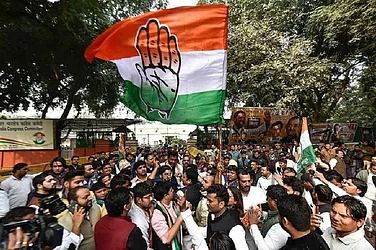
A decades-old historical debate resurfaced this week as the Bharatiya Janata Party (BJP) accused former Prime Minister Jawaharlal Nehru of omitting verses dedicated to Goddess Durga from ‘Vande Mataram’ in 1937. The issue, which has sparked discussions around faith, history, and politics, once again highlights how India’s freedom-era decisions continue to shape current political discourse.
How the controversy reignited
The BJP’s renewed attack came through a public statement linking the omission of Durga stanzas to what it described as a “selective secularism” rooted in Nehru’s leadership. The party argued that such decisions diluted cultural pride and spiritual symbolism embedded in India’s freedom movement.
The comment drew immediate reactions from opposition leaders, who termed the accusation as an attempt to reopen old wounds and divert attention from contemporary issues. Congress leaders countered that Nehru’s decision in 1937 aimed to maintain unity among communities during a politically sensitive time.
Understanding the background
‘Vande Mataram’, written by Bankim Chandra Chattopadhyay, was adopted as India’s national song. However, the debate over which stanzas to include dates back to pre-independence years. The first two stanzas—evoking love for the motherland—were retained as official, while those referencing Goddess Durga were left out to avoid communal divisions in a religiously diverse nation.
Historians have noted that the decision was influenced by the need to maintain harmony between Hindu and Muslim leaders within the Indian National Congress, which was spearheading the independence struggle.
Why the issue matters today
The revival of this controversy is not just about historical revision but about the political symbolism attached to it. In modern India, cultural and religious identity often intersect with electoral narratives. BJP leaders have consistently invoked nationalist and cultural themes, positioning themselves as defenders of India’s spiritual heritage.
On the other hand, critics argue that rehashing such historical debates may overshadow pressing governance challenges—ranging from economic issues to social development—and shift focus toward emotional politics.
Reactions from the political landscape
While BJP leaders framed the issue as a reminder of “erased cultural heritage,” opposition parties described it as an unnecessary provocation. Political observers point out that such exchanges tend to intensify during election seasons, especially when parties seek to consolidate their core voter base.
For younger voters in Tier-1 and Tier-2 cities like Mumbai, Nagpur, and Lucknow, the debate also opens a larger question: how much of modern India’s identity should be rooted in revisiting historical choices?
Cultural and civic perspective
Experts suggest that the recurring discussion around ‘Vande Mataram’ underlines India’s ongoing struggle to balance faith and inclusivity. The song continues to hold emotional and patriotic value across the country, yet interpretations of its spiritual references remain divided. Some argue for a cultural revival that embraces the complete version, while others call for preserving the secular spirit of the Constitution.
Civic voices, especially among India’s youth, are now calling for more context-based discussions—urging leaders to interpret historical events with sensitivity rather than political leverage.
Conclusion:
The current debate over ‘Vande Mataram’ and Nehru’s role in shaping its form shows how historical legacies remain central to India’s political identity. Whether seen as a matter of cultural pride or political strategy, the controversy reflects how the past continues to influence present-day narratives. As political parties trade claims, the challenge lies in ensuring that national symbols unite rather than divide—a test that continues for modern India’s democracy.