






Now Reading: Rahul Gandhi Performs Push-Ups After Late Arrival at Congress Training Camp in Madhya Pradesh
-
01
Rahul Gandhi Performs Push-Ups After Late Arrival at Congress Training Camp in Madhya Pradesh
Rahul Gandhi Performs Push-Ups After Late Arrival at Congress Training Camp in Madhya Pradesh
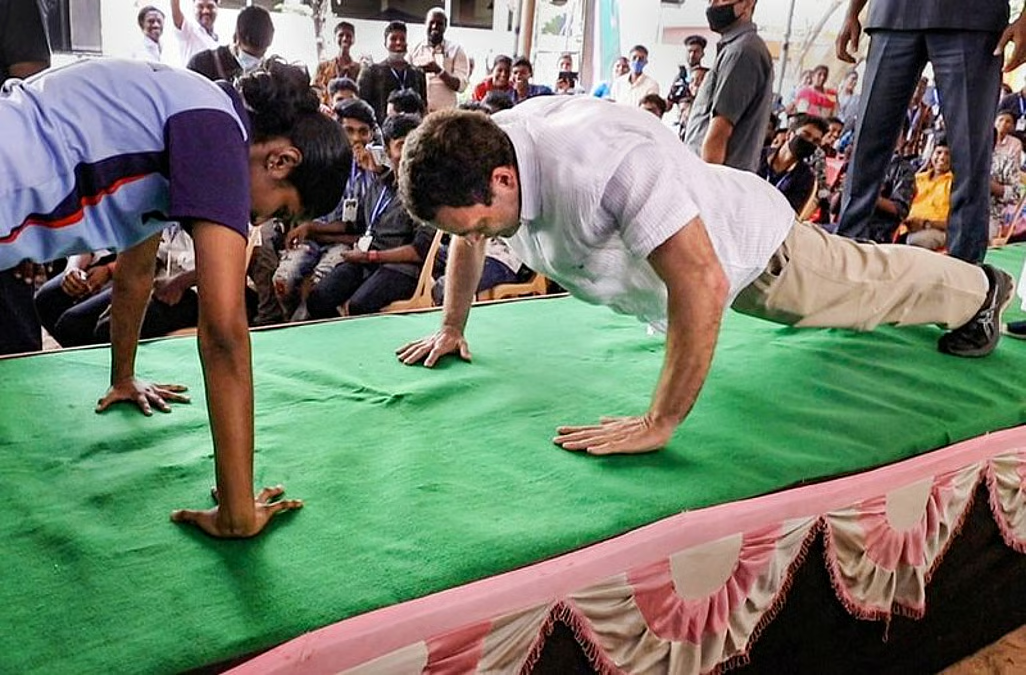
Congress leader Rahul Gandhi faced a light-hearted disciplinary action after arriving late at a party training camp in Madhya Pradesh. Reports indicate that Gandhi was asked to perform ten push-ups as a gesture of accountability. The incident has caught public attention for its unusual nature, showcasing a mix of discipline and camaraderie within party ranks while also highlighting how political leaders participate in grassroots-level organisational activities.
Incident at the Training Camp
The training camp, organised to equip party workers and leaders with strategic and organisational skills, saw Rahul Gandhi arriving slightly behind schedule. To set an example and maintain discipline, the camp coordinators asked him to complete a set of ten push-ups. Photographs and videos of the exercise circulated widely on social media, prompting discussions about leadership styles and accountability in political settings.
Party’s Perspective on Discipline
Congress leaders emphasised that the exercise was symbolic, aimed at reinforcing the importance of punctuality and responsibility among party members. Senior organisers noted that such actions encourage a culture of humility and participation, even for high-ranking leaders. They stressed that the training camps are designed to foster discipline, teamwork, and practical engagement rather than being punitive in nature.
Public Reaction and Social Media Buzz
The push-up incident quickly became a talking point across social media platforms. While some users appreciated the gesture as a relatable and humanising moment for a senior politician, others debated its relevance and the optics of such public displays. Analysts suggest that these moments can influence public perception, highlighting leaders’ willingness to engage with party workers on a personal and informal level.
Importance of Grassroots Training
Political parties in India often conduct training camps to enhance organisational skills, strengthen local leadership, and familiarise members with policy and governance priorities. Leaders like Rahul Gandhi attending these sessions demonstrate a hands-on approach to party management, bridging gaps between senior leadership and grassroots workers in Tier 1 and Tier 2 cities alike.
Leadership, Accountability, and Symbolism
While the push-up may seem trivial, it carries symbolic significance. It reflects a leadership style where senior figures actively model accountability, setting expectations for younger members. Experts note that such gestures, though minor, can foster respect, motivation, and a sense of equality within hierarchical organisations.
Conclusion: Rahul Gandhi’s push-up episode at the Madhya Pradesh training camp highlights a blend of discipline, symbolism, and accessibility in political leadership. Beyond the media attention it generated, the incident underscores how Indian political parties increasingly use interactive and participatory methods to cultivate teamwork, punctuality, and responsibility among their members across both urban and semi-urban regions.