









Now Reading: Rupee likely to open weaker as foreign fund outflows increase
-
01
Rupee likely to open weaker as foreign fund outflows increase
Rupee likely to open weaker as foreign fund outflows increase
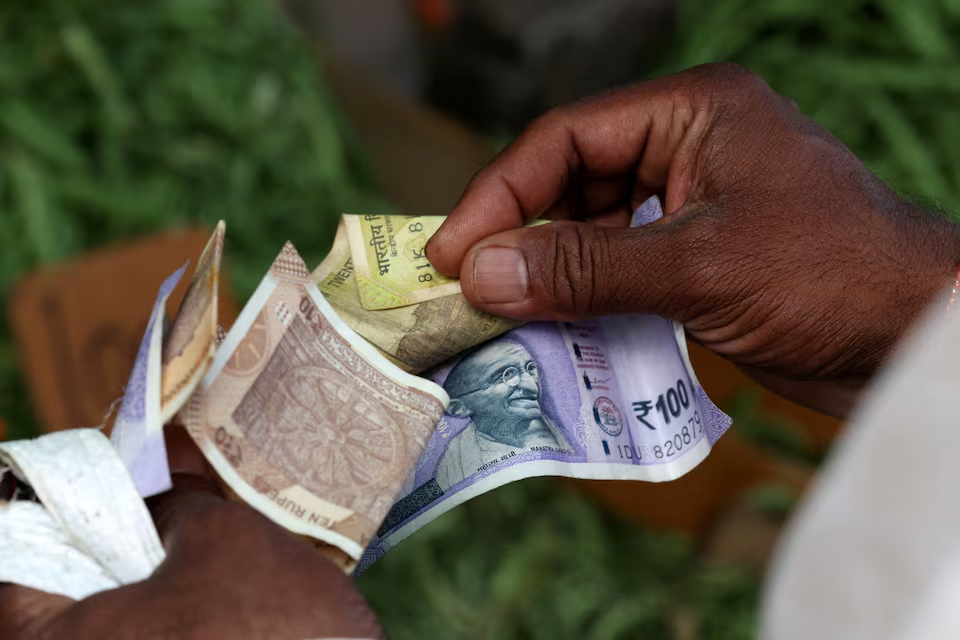
The rupee is likely to open weaker in early trade as foreign fund outflows continue to exert downward pressure on the currency. Market participants expect volatility through the session as global interest rate signals and risk sentiment influence demand for emerging market currencies.
Early indicators from overnight markets suggest a cautious tone among investors. Persistent foreign portfolio selling in Indian equities and debt has added pressure on the rupee, which has traded within a narrow but declining range over recent days. Traders anticipate that dollar demand from importers may also contribute to near term weakness.
Foreign fund outflows and secondary global market pressures
Foreign fund outflows remain the primary driver of the rupee’s current trajectory. Investors have shifted capital towards safer assets due to uncertainty around global monetary policy. When foreign investors sell domestic equities or bonds, they convert proceeds back into dollars, increasing pressure on the local currency. Secondary global market pressures such as firm US Treasury yields and stronger dollar index readings have amplified the effect.
India has seen steady equity outflows in recent sessions, particularly in large cap sectors. Debt market outflows have also risen as global funds reassess yield differentials. These cross border movements influence daily currency trends, especially during periods when the dollar strengthens against a broad basket of currencies.
Domestic market sentiment, dollar demand and short term trading patterns
Domestic market sentiment has weakened due to volatility in equity indices. The short term trading pattern suggests that traders may adopt a defensive approach by holding more dollar positions. Dollar demand from import heavy sectors typically increases in December as companies close annual contracts and settle payments. This seasonal trend often adds incremental pressure on the rupee.
Banks and corporate treasuries have begun adjusting their hedging strategies to manage expected fluctuations. Traders anticipate that the central bank may intervene intermittently to smooth volatility, but such interventions generally aim at preventing disorderly movements rather than defending specific levels. Market depth remains healthy, but sentiment is cautious as global factors dominate.
Global cues, policy expectations and secondary indicators to watch
Global cues such as inflation data releases, commentary from major central banks and geopolitical developments often set the tone for currency markets. Secondary indicators like crude oil prices, commodity movements and foreign exchange reserves help determine the rupee’s resilience. A steady reserve position allows the central bank to manage short term volatility effectively.
Crude oil remains an important variable for India, given its status as a major importer. A rise in oil prices tends to weaken the rupee by increasing import bills. However, oil prices have displayed mixed trends recently, offering limited support to the currency. The broader environment remains sensitive to US economic data releases that influence rate expectations.
Outlook for the rupee, market volatility and investor strategies
The rupee’s outlook in the coming sessions will depend on the scale of foreign fund outflows and the response of global markets. If foreign selling moderates, the currency may stabilise within its existing range. However, persistent outflows could push it to test new levels. Traders emphasise that intraday volatility may remain high, particularly around macroeconomic announcements.
Investor strategies vary based on risk profiles. Importers often increase hedging when the rupee weakens, while exporters may delay conversions to benefit from favourable rates. Portfolio managers are monitoring global risk sentiment closely, as a shift towards risk on behaviour could revive foreign inflows and strengthen the currency.
Despite the near term weakness, India’s macro fundamentals remain relatively stable. Steady growth projections, controlled inflation trends and strong foreign exchange reserves provide a buffer against excessive volatility. Analysts maintain that while the rupee may weaken in the short term, structural stability supports a balanced medium term outlook.
Takeaways
Rupee is expected to open weaker due to foreign fund outflows
Stronger dollar trends and global risk aversion are influencing currency movements
Domestic dollar demand and equity volatility add to near term pressure
Market stability depends on foreign inflow patterns and global rate signals
FAQs
Why is the rupee expected to open weaker today
Foreign fund outflows and stronger global dollar trends are creating downward pressure on the currency.
How do foreign investors affect the rupee’s movement
When foreign investors sell Indian assets, they convert proceeds into dollars, increasing dollar demand and weakening the rupee.
Will the central bank intervene to support the rupee
The central bank may intervene to reduce volatility, but it does not target specific exchange rate levels.
What could help the rupee stabilise
Reduced foreign selling, improved global risk sentiment and steady macroeconomic indicators could support the currency.