





Now Reading: Union Budget 2026 Expectations: Middle Class Tax Relief in Focus
-
01
Union Budget 2026 Expectations: Middle Class Tax Relief in Focus
Union Budget 2026 Expectations: Middle Class Tax Relief in Focus
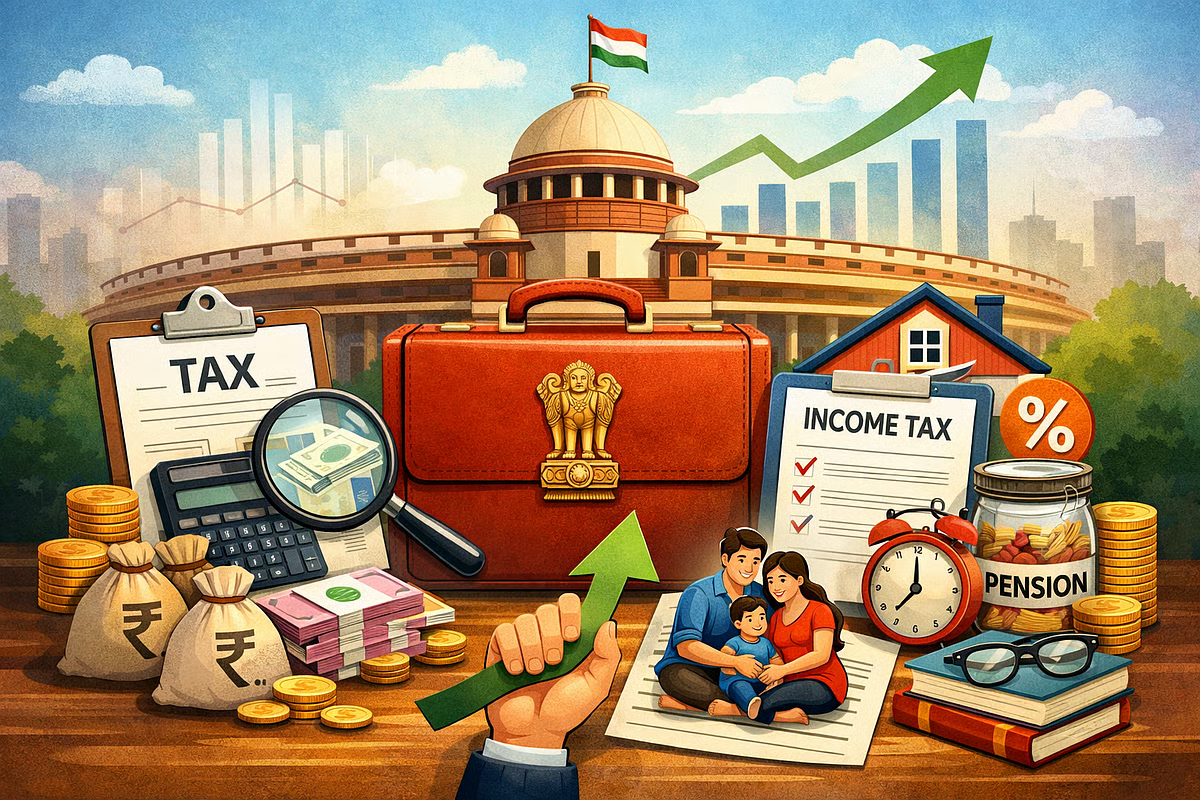
As Union Budget 2026 approaches, middle class tax relief has emerged as the most watched expectation. Rising living costs, higher loan EMIs, and stagnant real income growth have sharpened demands for personal income tax changes that directly improve disposable income.
Budget 2026 Context and Policy Environment
Union Budget 2026 is being prepared in a mixed economic environment. India remains one of the fastest-growing major economies, but household finances are under pressure. Food inflation has stayed sticky in several months, education and healthcare costs continue to rise, and urban housing affordability is stretched.
From a fiscal standpoint, the government has committed to gradual deficit consolidation while protecting capital expenditure. That limits room for aggressive tax giveaways, making targeted middle class relief more likely than sweeping cuts. The main keyword, middle class tax relief, is central to the broader political and economic narrative of Budget 2026.
Income Tax Slab Changes Under Discussion
One of the most anticipated announcements is a revision of income tax slabs under the new tax regime. Currently, the new regime offers lower rates but fewer deductions, while the old regime remains popular among salaried taxpayers due to exemptions.
There is strong expectation that Budget 2026 may widen slabs or reduce rates for income between Rs 7 lakh and Rs 15 lakh. This segment includes a large share of urban salaried professionals and dual-income households. Any slab rationalisation here would immediately impact take-home pay and consumption sentiment.
Standard Deduction and Exemption Expectations
Another key focus is the standard deduction for salaried taxpayers. After being extended to the new tax regime, many expect a further increase in Budget 2026 to offset inflationary pressure. Raising the standard deduction is administratively simple and delivers visible relief without complicating compliance.
Taxpayers are also watching whether exemptions related to savings instruments and insurance are adjusted. While major expansion is unlikely due to simplification goals, limited tweaks could be announced to retain the attractiveness of long-term savings.
Impact of Inflation and Cost of Living Pressures
Inflation remains a critical backdrop to Budget 2026 expectations. Although headline inflation has moderated compared to earlier peaks, essential expenses such as food, rent, school fees, and medical costs continue to rise faster than income growth for many households.
Middle class tax relief is increasingly framed as an inflation buffer rather than a consumption stimulus. Even small reductions in tax outgo can help families manage monthly budgets, especially those servicing home or education loans.
New Tax Regime Versus Old Regime Debate
Budget 2026 is also expected to reinforce the transition towards the new tax regime. Policymakers have consistently signalled that the new regime is the future of personal taxation in India. To accelerate adoption, further incentives may be added to make it clearly superior for most taxpayers.
This could include simplified slabs, higher rebate thresholds, or selective deductions designed specifically for salaried individuals without complex investment portfolios. The old regime may continue, but without major enhancements.
Political Significance of Middle Class Relief
Middle class taxpayers are a vocal and politically influential group. With several state elections ahead and general elections in the following year, Budget 2026 carries political weight. Direct tax relief is one of the fastest ways to signal responsiveness to middle-income concerns.
However, any relief must be balanced against fiscal discipline and welfare spending priorities. This makes calibrated tax adjustments more probable than headline-grabbing tax cuts.
Likely Outcomes and What to Watch
While expectations are high, Budget 2026 is unlikely to radically overhaul personal taxation. The focus is expected to remain on incremental relief, simplification, and nudging taxpayers toward the new regime. Clear communication and predictability will matter as much as the quantum of relief.
For middle class households, even modest changes in slabs, deductions, or rebates can meaningfully improve post-tax income in the coming financial year.
Takeaways
- Middle class tax relief is a central expectation from Union Budget 2026
- Income tax slab rationalisation in the Rs 7–15 lakh range is closely watched
- Standard deduction increase remains one of the most likely relief measures
- Budget 2026 is expected to further promote the new tax regime
FAQs
Will Union Budget 2026 reduce income tax rates?
A broad rate cut is unlikely, but targeted slab adjustments or rebates may be introduced for middle income groups.
Is an increase in standard deduction expected?
Yes, many analysts expect a modest increase as it provides immediate relief without complicating tax structure.
Will the old tax regime be discontinued in Budget 2026?
The old regime is expected to continue, but policy signals suggest the government prefers gradual migration to the new regime.
How will middle class tax relief impact the economy?
Higher disposable income can support consumption, improve household savings stability, and boost overall economic sentiment.