






Now Reading: WhatsApp New Privacy Changes 2026: What Indian Users Must Know
-
01
WhatsApp New Privacy Changes 2026: What Indian Users Must Know
WhatsApp New Privacy Changes 2026: What Indian Users Must Know
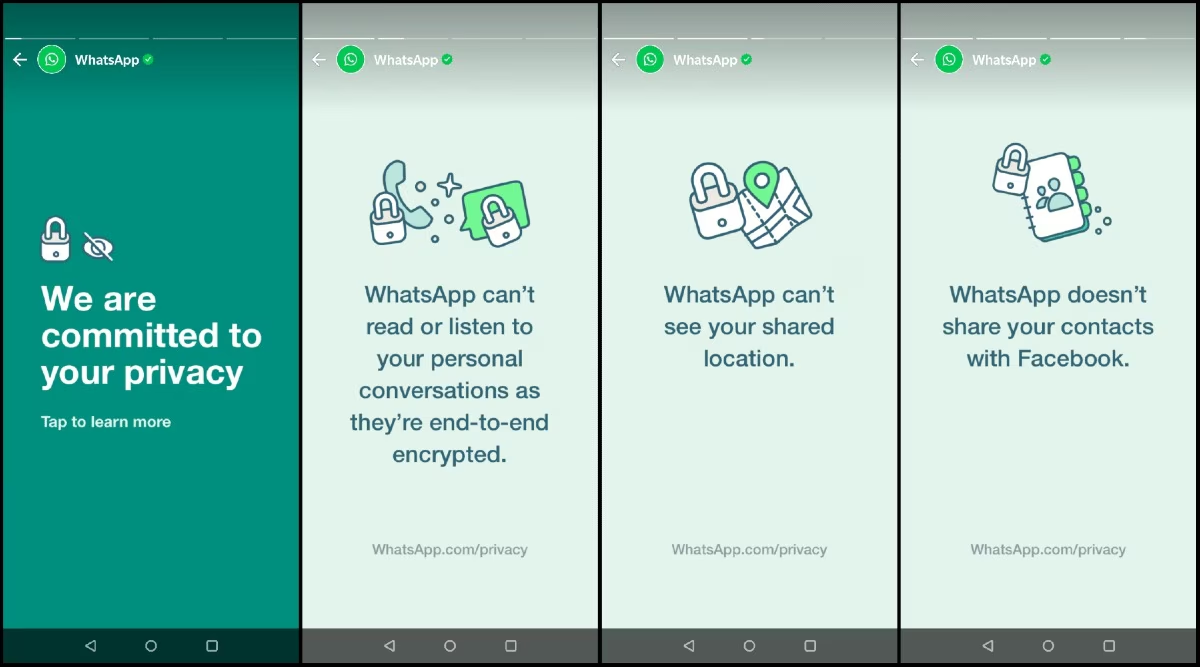
WhatsApp new privacy changes 2026 have drawn attention from Indian users as updates affect data handling, user controls, and business interactions. While core messaging remains end-to-end encrypted, the changes introduce clearer consent rules, expanded transparency, and tighter alignment with India’s evolving digital regulations.
Context Behind WhatsApp Privacy Changes 2026
The WhatsApp new privacy changes 2026 come amid stronger global and Indian scrutiny of digital platforms. India’s expanding digital user base and tighter data protection expectations have pushed platforms to clarify how user data is collected, processed, and shared. These updates are positioned as compliance-driven rather than feature-driven.
For Indian users, privacy expectations are shaped by high usage across personal messaging, payments, and business communication. The 2026 changes aim to formalise existing practices while giving users clearer choices, especially where data intersects with business services and Meta-owned platforms.
What Remains Unchanged for Personal Chats
A key reassurance for users is that personal chats remain protected by end-to-end encryption. This means WhatsApp cannot read messages, listen to calls, or access shared media between individuals. Group chats continue to operate under the same encryption standards.
The privacy changes do not introduce message scanning for ads or content monitoring. Personal message content is not used for advertising or shared with third parties. This distinction is important as misinformation around privacy updates often spreads confusion among users.
Data That WhatsApp Collects and Why
Under the updated privacy framework, WhatsApp continues to collect limited metadata rather than message content. This includes device information, app usage data, IP address, and contact interactions such as frequency of communication, not message details.
The stated purpose of this data collection includes service security, spam prevention, performance improvement, and legal compliance. Indian users are specifically informed how such data supports features like account safety, fraud detection, and service reliability.
Business Messaging and Data Sharing Changes
One of the most relevant updates in WhatsApp new privacy changes 2026 concerns business messaging. When users interact with verified business accounts, certain data may be shared with Meta to support customer service tools, analytics, and ad performance measurement.
WhatsApp now clearly labels conversations involving businesses that use Meta-hosted services. Users are informed before initiating chats that business messages may be stored or processed differently. This transparency is intended to help users make informed choices while engaging with brands and service providers.
Expanded User Controls and Consent Options
The 2026 update strengthens user control over privacy settings. Users can manage who sees profile photos, last seen status, online presence, and read receipts with more granular options. Default settings remain privacy-focused for new users.
Consent notices have been simplified and localised for better understanding. Indian users are provided clearer prompts when changes affect data usage, especially in contexts involving payments, business chats, or optional integrations with other Meta services.
WhatsApp Payments and Financial Data Handling
For users of WhatsApp Payments in India, privacy handling follows local financial regulations. Transaction data is stored within the country and processed separately from personal chat data. Payment information is not shared for advertising purposes.
The updated privacy policy clarifies that financial data is governed by regulatory requirements, including audit and compliance obligations. This separation aims to address concerns around sensitive financial information misuse.
Impact on Indian Users and Daily Usage
For most individual users, daily WhatsApp usage will remain unchanged. Messaging, calling, and media sharing continue as before. The practical impact is more visible for users who frequently interact with businesses, customer support channels, or promotional accounts.
Users who ignore policy prompts may still continue using the app, but understanding consent options helps avoid confusion later. The changes emphasise awareness rather than forcing immediate action from users.
Common Misconceptions Around the 2026 Update
A recurring misconception is that WhatsApp will read messages or show ads inside chats. This is incorrect. Ads remain limited to other Meta platforms and potentially WhatsApp Channels or business discovery areas, not personal conversations.
Another misunderstanding is forced data sharing with Facebook or Instagram. While Meta integration exists at a system level, personal chat content remains isolated and encrypted.
What Indian Users Should Do Now
Users should review privacy settings after updating the app and understand how business messaging works. Those uncomfortable with Meta-hosted business chats can limit interactions to trusted accounts only.
Keeping the app updated ensures access to the latest security patches and control features. Awareness, rather than panic, is the appropriate response to the WhatsApp new privacy changes 2026.
Takeaways
- Personal chats remain end-to-end encrypted under WhatsApp privacy changes 2026
- Business messages may involve limited data sharing with Meta
- Indian users get clearer consent prompts and privacy controls
- Daily messaging experience remains largely unchanged
FAQs
Does WhatsApp read messages after the 2026 privacy update?
No, personal messages and calls remain end-to-end encrypted and unreadable by WhatsApp.
Are ads coming to personal WhatsApp chats?
No, ads are not shown inside personal chats or private conversations.
Is WhatsApp sharing data with Facebook automatically?
Only limited metadata is shared for service purposes, not message content.
Should Indian users accept the new privacy policy?
Accepting allows continued use of WhatsApp, but users should review settings to understand data use.